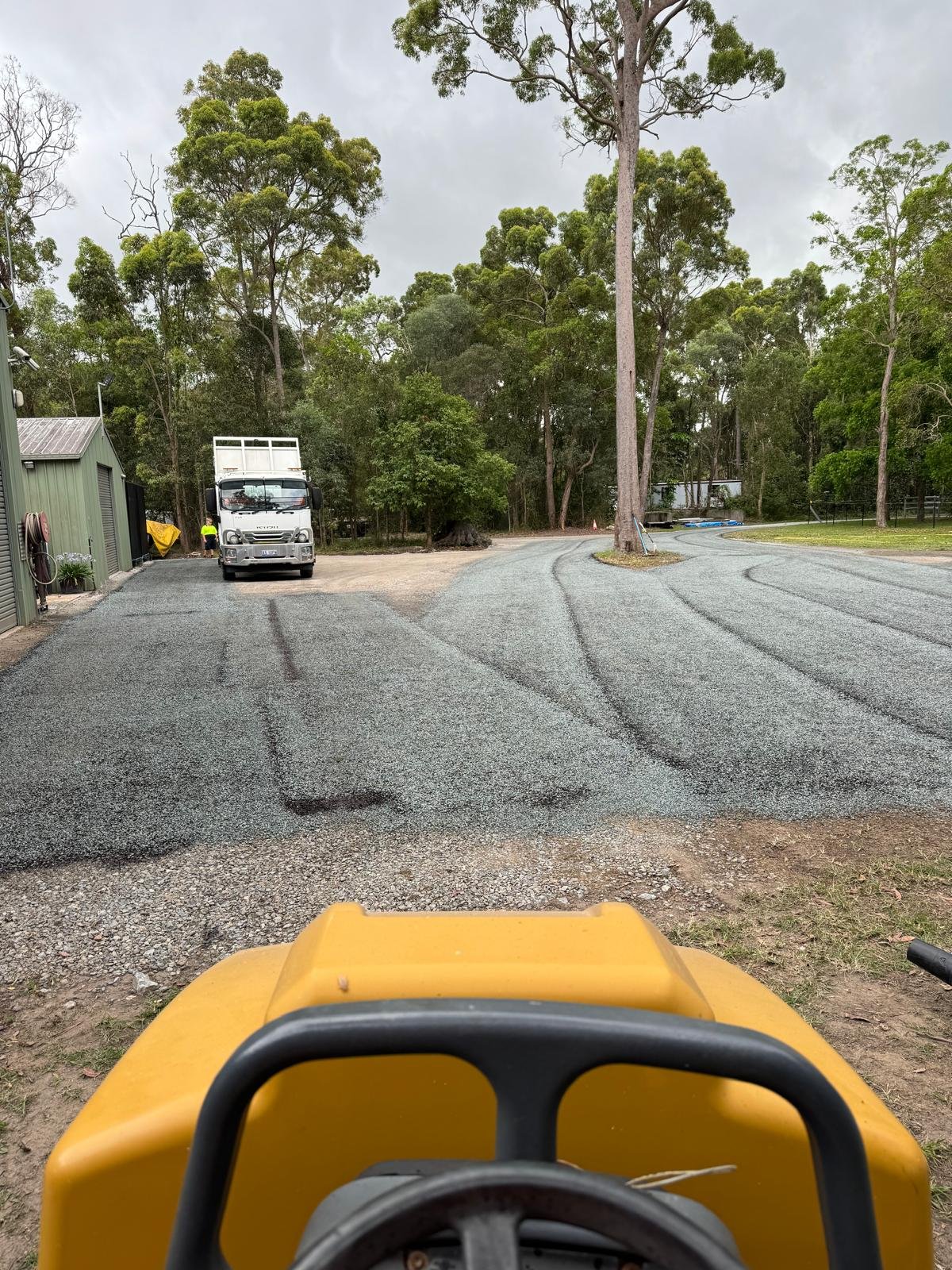
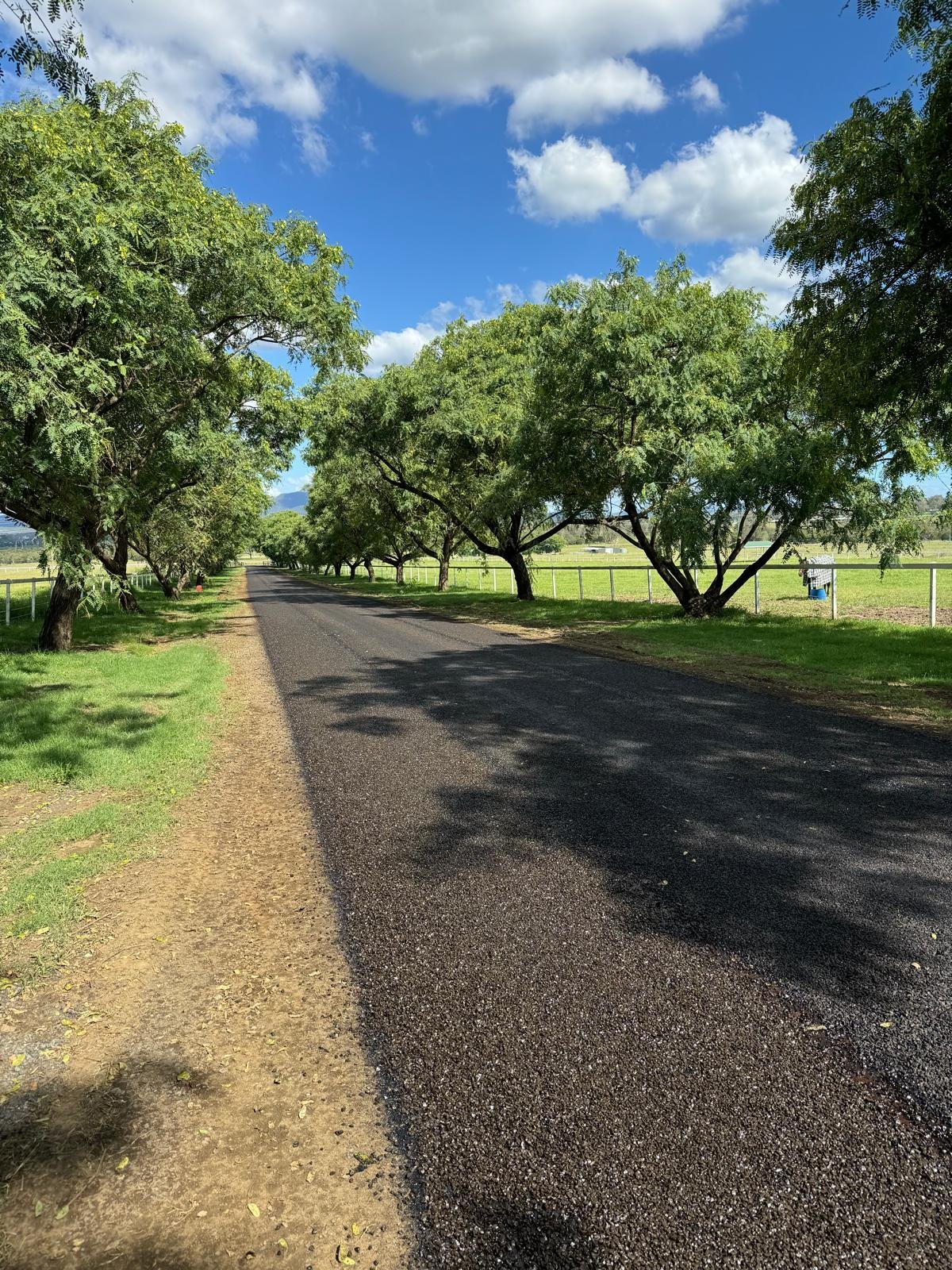
Customers see your car park before they see you, and potholes and puddles there make the first impression.
We build new asphalt car parks and resurface worn ones for businesses, body corporates and rural properties across Brisbane, Ipswich and the Sunshine Coast. Use the form or call 0400 123 222 to book a free site visit and quote.
Most car park failures start underneath.
Car park pavements are built to suit the traffic they will carry, with the base getting deeper as the vehicles get heavier. A car park with a weekly garbage truck or regular deliveries needs more depth than one used only by cars. Drainage matters just as much. The surface needs enough slope, which contractors call fall, to carry water to pits, grates or the kerb, because water left sitting on asphalt soaks into the base and breaks it up from below.
Then there’s the layout. Bay sizes, aisle widths and accessible parking are set by Australian Standards and your council, so a new car park usually starts from approved plans. If you have drawings, send them with your quote request. For a resurface on the existing layout, a site visit is enough.
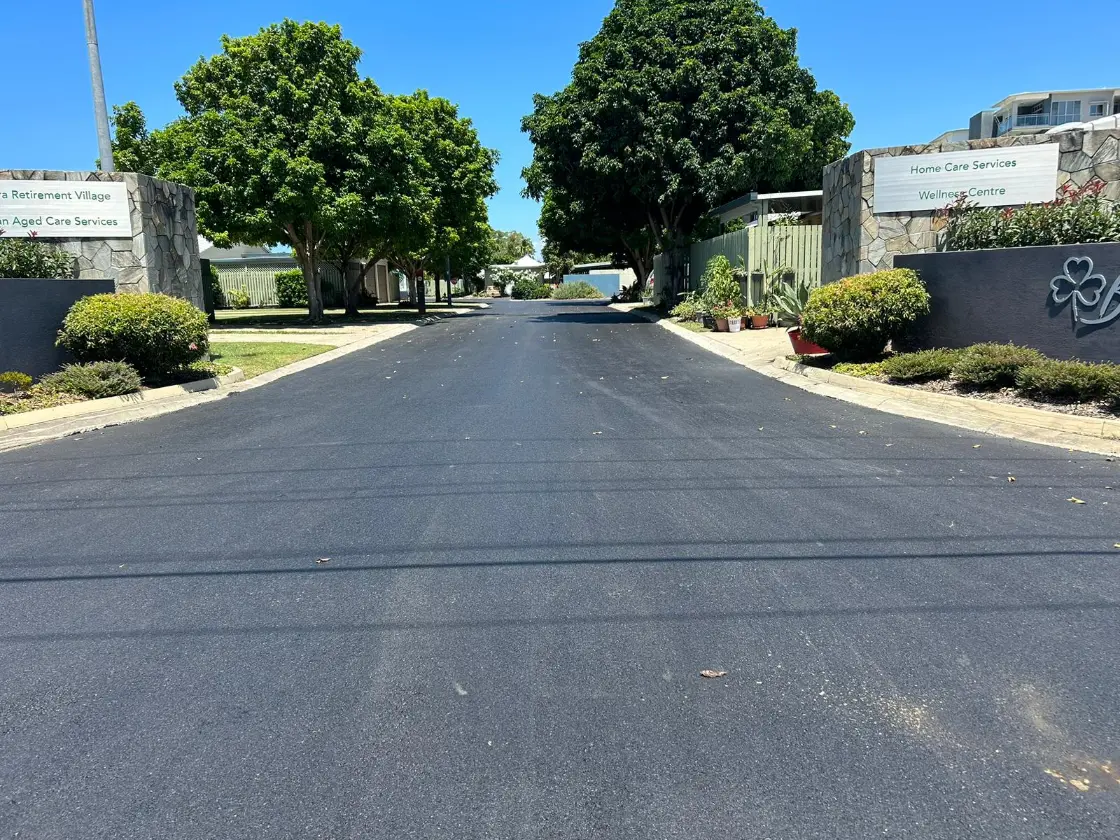
Asphalt gives a smooth, tight surface that handles cars turning and reversing all day, which makes it the standard choice for shops, offices and clinics.
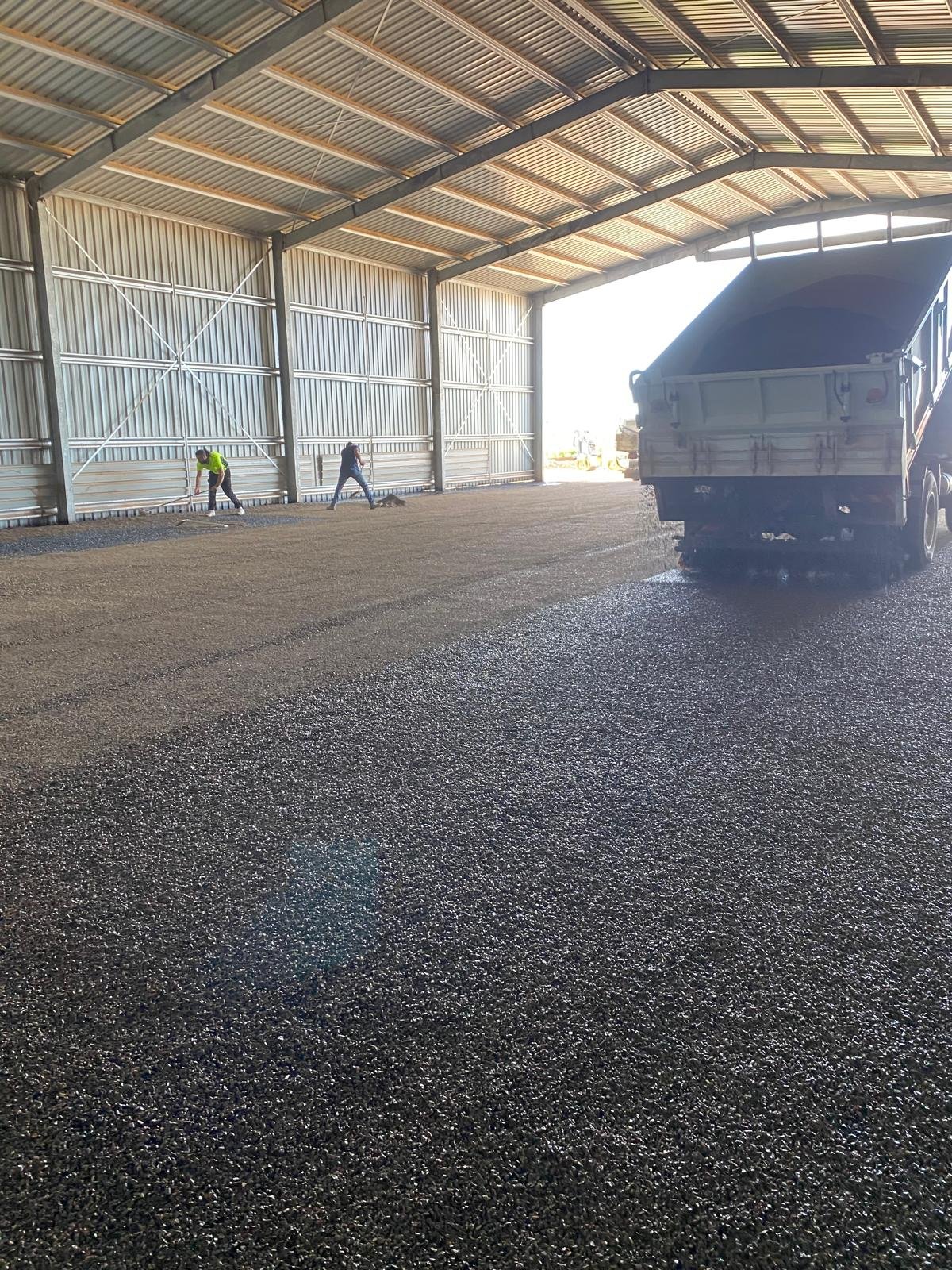
When compared to asphalt, a spray seal is the cheaper way to seal large yards, rural car parks, access roads and hardstands (the sealed pads where trucks and machinery park), anywhere traffic mostly runs straight. It still ends the dust and mud, which is often the main reason for doing the job in the first place. Read more on our spray sealing page.

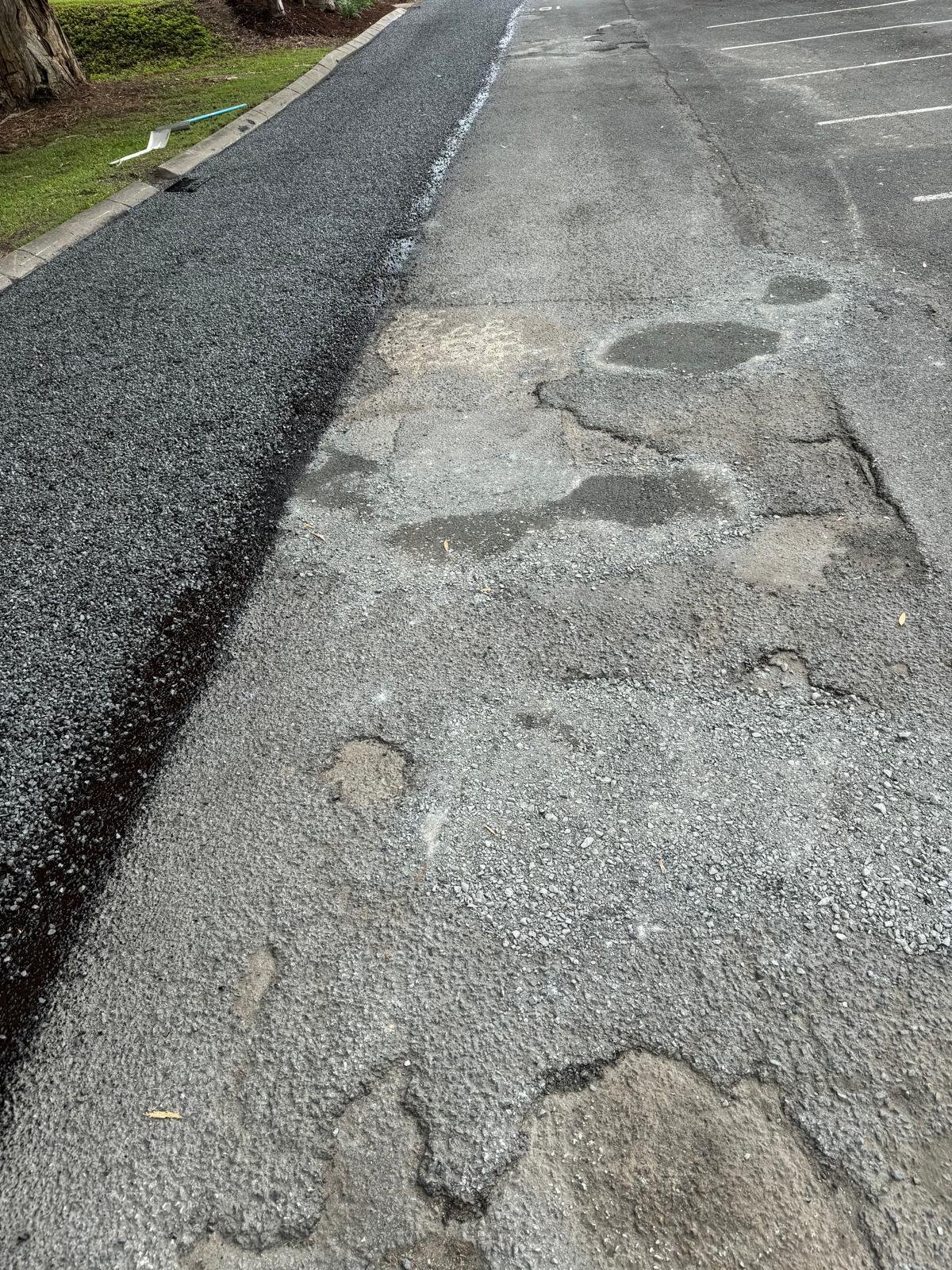
An existing car park that is cracking, potholed or holding water can be patched, resurfaced with a new layer of asphalt, or rebuilt where the base has failed. Which one it needs depends on what’s underneath, and that’s the first thing we check.
Our asphalt repairs page explains how we tell the difference, and the guide to car park repair covers crack patching in more detail.

New build or resurface, most car park jobs follow these steps.
Car park questions
Cars can usually drive on new asphalt after 24 hours. Heavy vehicles should wait longer, especially in summer when the surface stays soft, and line marking goes on once it has cured.
Enough slope to carry water to pits, grates or the kerb, with no flat spots where puddles can sit. Water that sits on asphalt finds its way into the base, and that’s where potholes start.
Usually. Larger car parks can be done in stages so part of it stays open, and work can be planned for your quieter days.
Asphalt suits busy car parks where cars turn and park all day, because tight turns scuff the stones off a spray seal. A spray seal is a sound, cheaper choice for big yards, rural car parks and hardstands where traffic runs straighter.
New car parks are usually part of a development approval with engineered plans, so check with your council or certifier first. Resurfacing an existing car park on the same layout often needs no new plans, but confirm it before work starts.
It depends on the area, the base your traffic needs, the drainage and the choice between asphalt and spray seal. We quote after a free site visit and can price the options side by side.
Get In Touch
Book a free site visit for your car park
Tell us the address, roughly how many bays or square metres, and whether it’s a new car park or a resurface. If you have plans, email them to hello@rcciviloz.com.au.
Want a quick quote or need some help?
Let us point you in the right direction.
© 2024 RC CIVIL OZ Pty LTD.