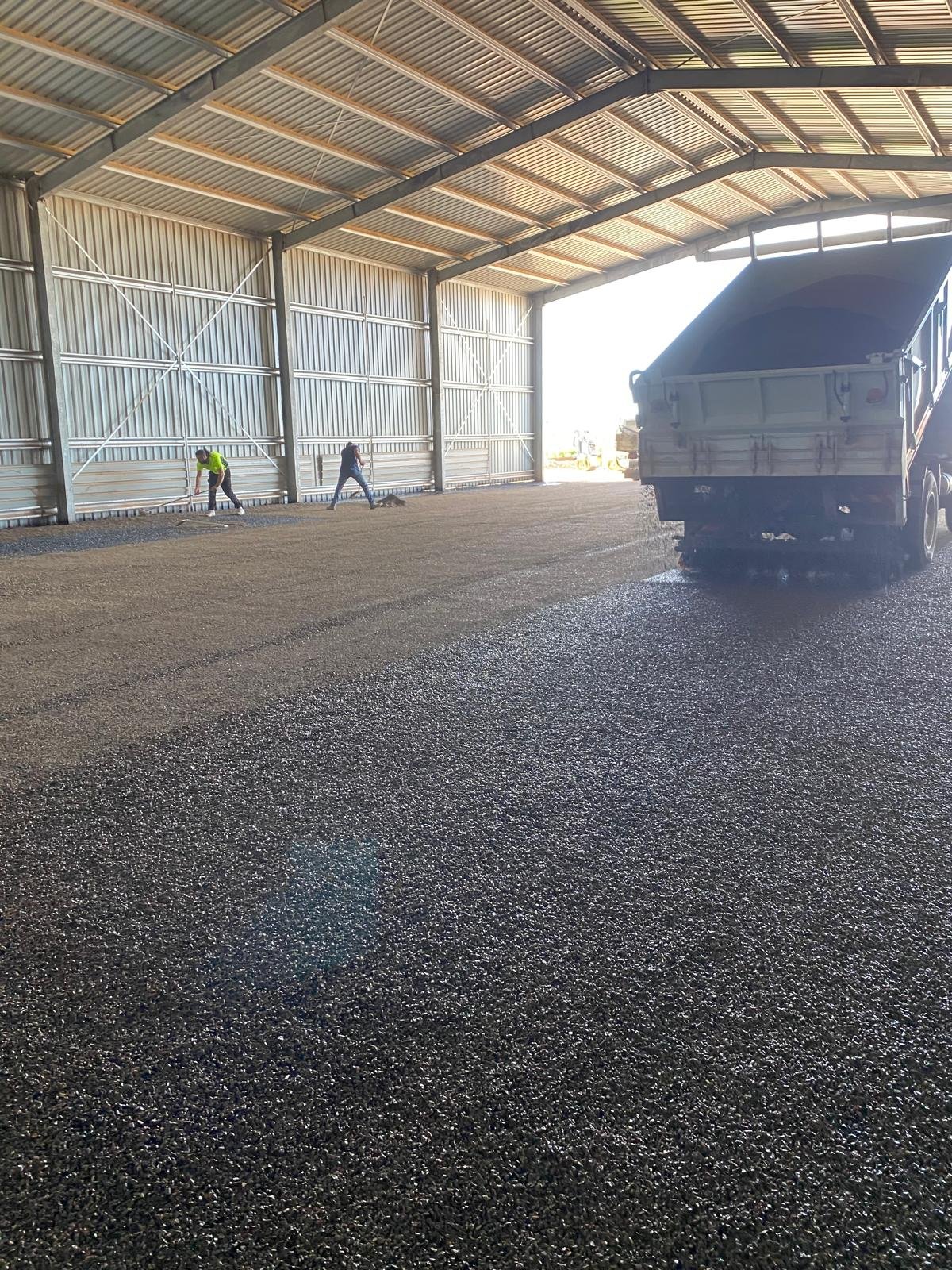
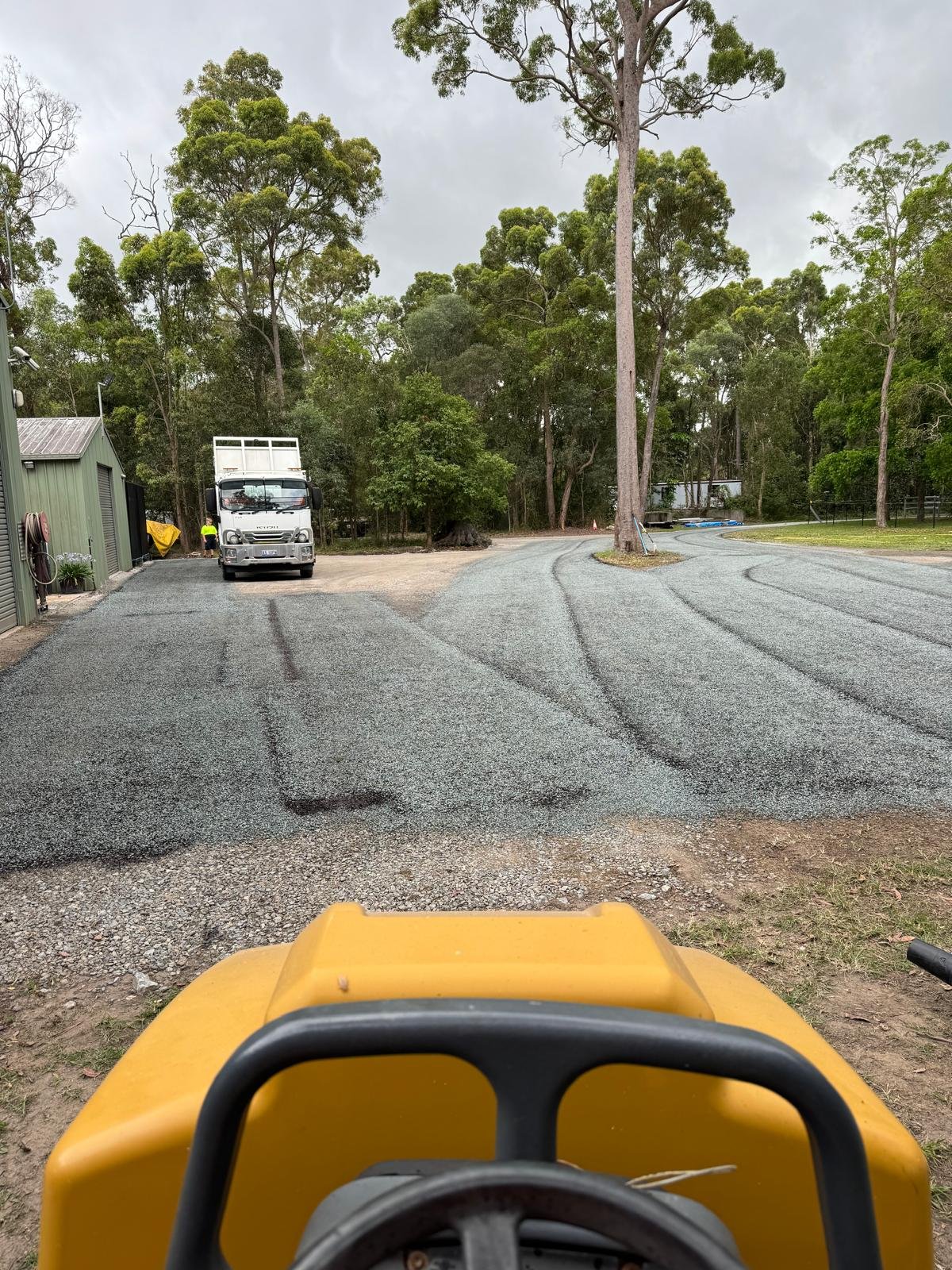
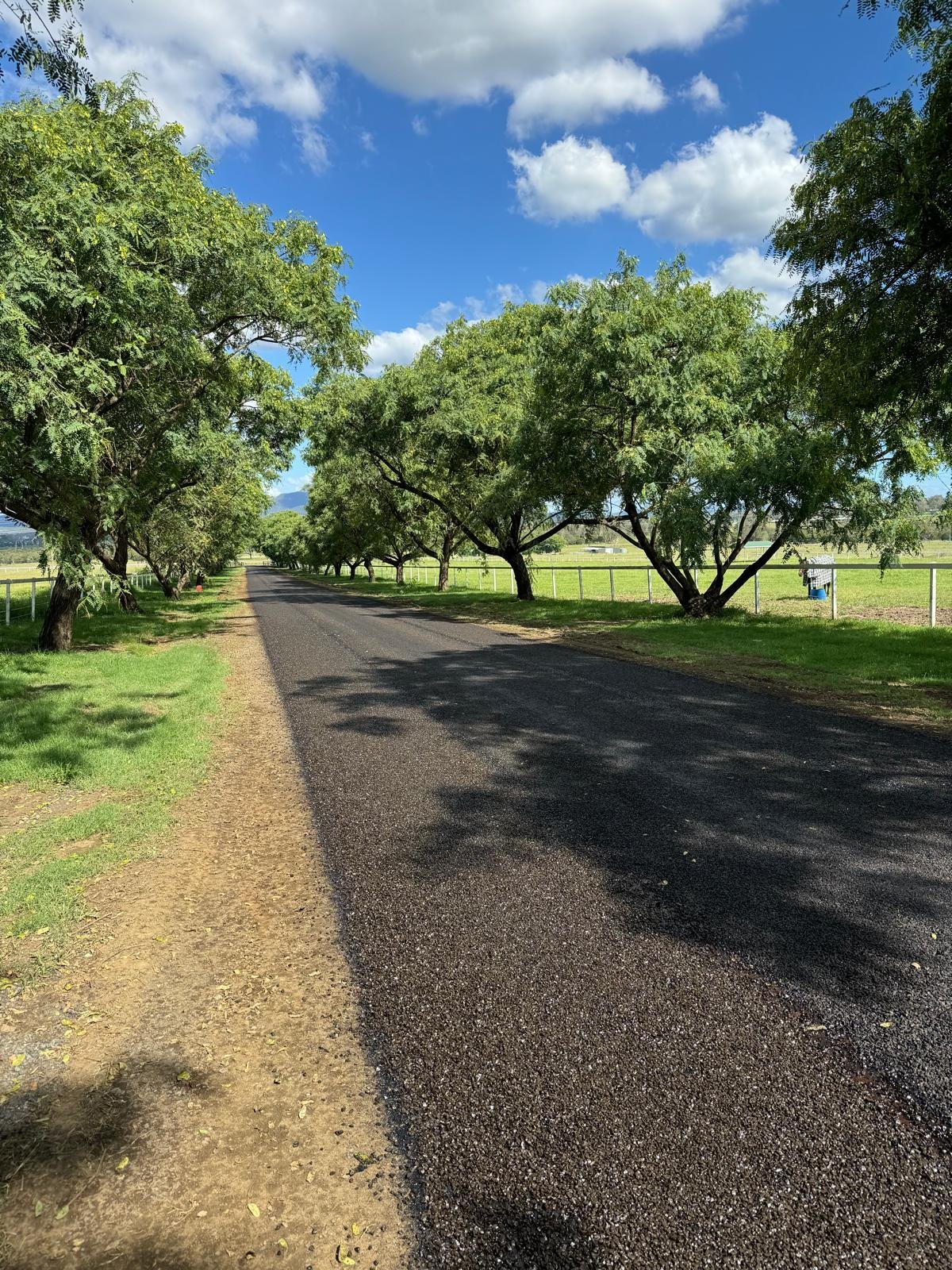
Potholes, cracks and broken edges only grow once water gets into them.
We repair asphalt and bitumen surfaces across Brisbane, Ipswich and the Sunshine Coast, from busy commercial car parks to a single pothole in a home driveway. That means cutting out the failed patch, fixing the base under it where it has gone soft, and laying new hot asphalt rolled level with the surface around it.
Use the form or call 0400 123 222 for a free quote. A photo of the damage emailed to hello@rcciviloz.com.au helps us give you a useful first answer.
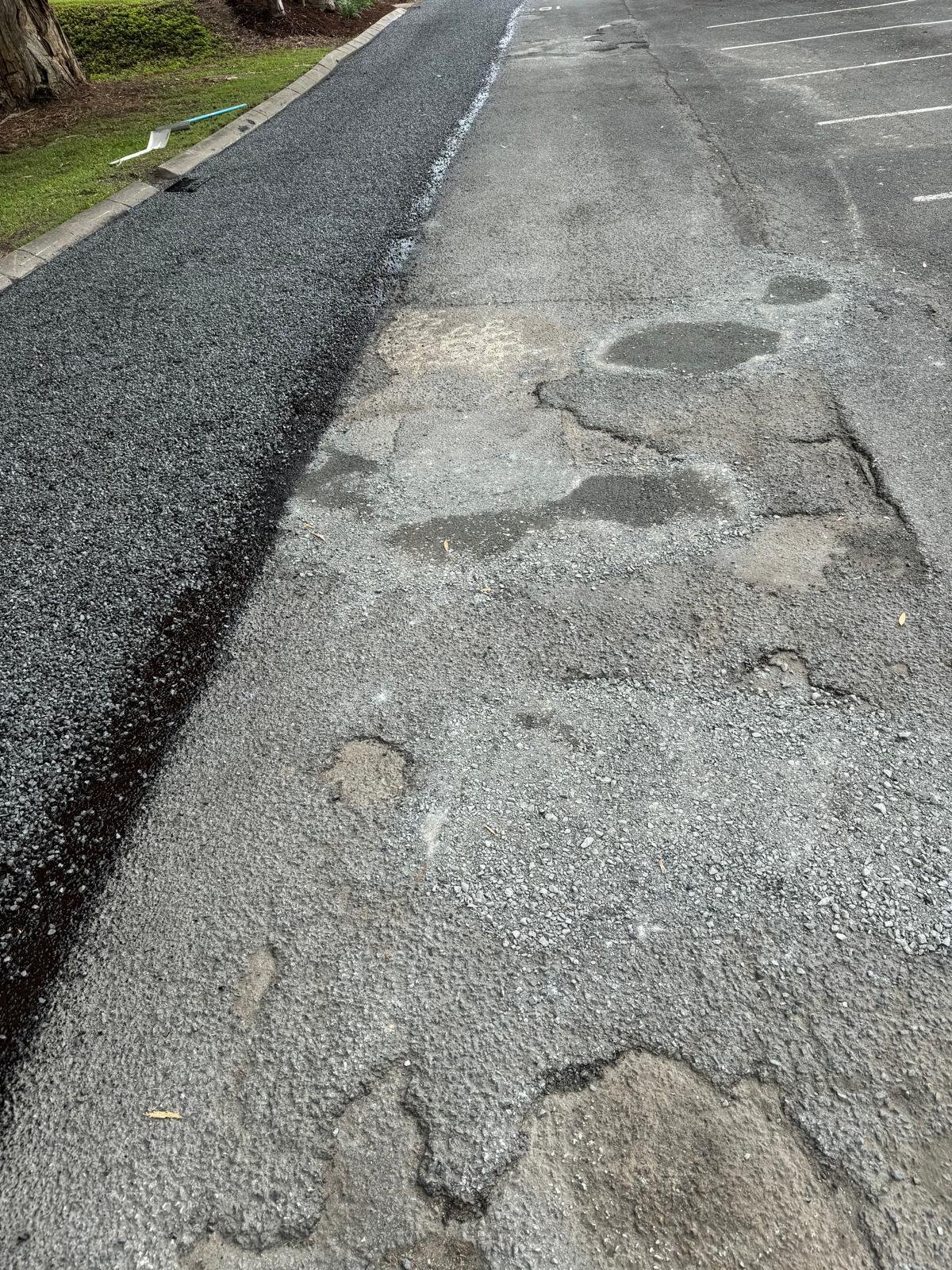
Asphalt doesn’t fail the same way everywhere. Even on one driveway you can see fine cracks, crazy-paving cracks, potholes and broken edges, and each has its own cause. The cause decides the fix.


The answer depends on how much of the surface has failed, and whether the base under it is still firm.
Surfaces that are only cracked, faded or worn on top can often be fixed with a resurface, and it’s best to act before the damage gets worse. We’ll tell you which your driveway or car park needs, and price it. Resurface or replace and how to fix cracks in asphalt go into both in more depth.
A car park may seem tough when it’s new, but after a few summers and wet seasons, delivery trucks, tight turns and water sitting in low spots start to break it up. Small faults are cheap to fix early. Sealing cracks and patching potholes before they spread keeps the surface going longer and takes trip hazards out of your customers’ way.
Bigger jobs can usually be split into sections, so part of the car park stays open. Tell us your busy times and we’ll plan around them. For new car parks and full resurfacing, see our asphalt car park page.

Asphalt repair questions
One pothole can be fixed on its own, as long as the surface around it is sound. If potholes keep coming back in the same area, the base under it has probably failed and that section needs rebuilding.
Crack filler only treats the surface. If the ground underneath is moving, or water keeps getting in, new cracks open beside the old ones, and that area needs cutting out and rebuilding.
On fine cracks in a sound surface, yes: keeping water out of the base is the cheapest way to make asphalt last. On crazy-paving cracks it’s money wasted, because the damage is underneath.
Usually, at least in part. The job can be split into sections, and a repaired patch can take traffic once the asphalt has cooled.
It depends on how big the repairs are, how many there are and whether the base needs rebuilding. Small jobs cost more per square metre because the truck and crew cost the same to bring out, so it pays to fix several problem spots in one visit.
Yes. Small areas can be patched with asphalt, and a worn spray seal can be resealed over the top if the base is still sound. See our spray sealing page.
Get In Touch
Ask for a free repair quote
Tell us where the damage is and roughly how big it is. A photo emailed to hello@rcciviloz.com.au helps us give you a better first answer.
Want a quick quote or need some help?
Let us point you in the right direction.

© 2024 RC CIVIL OZ Pty LTD.