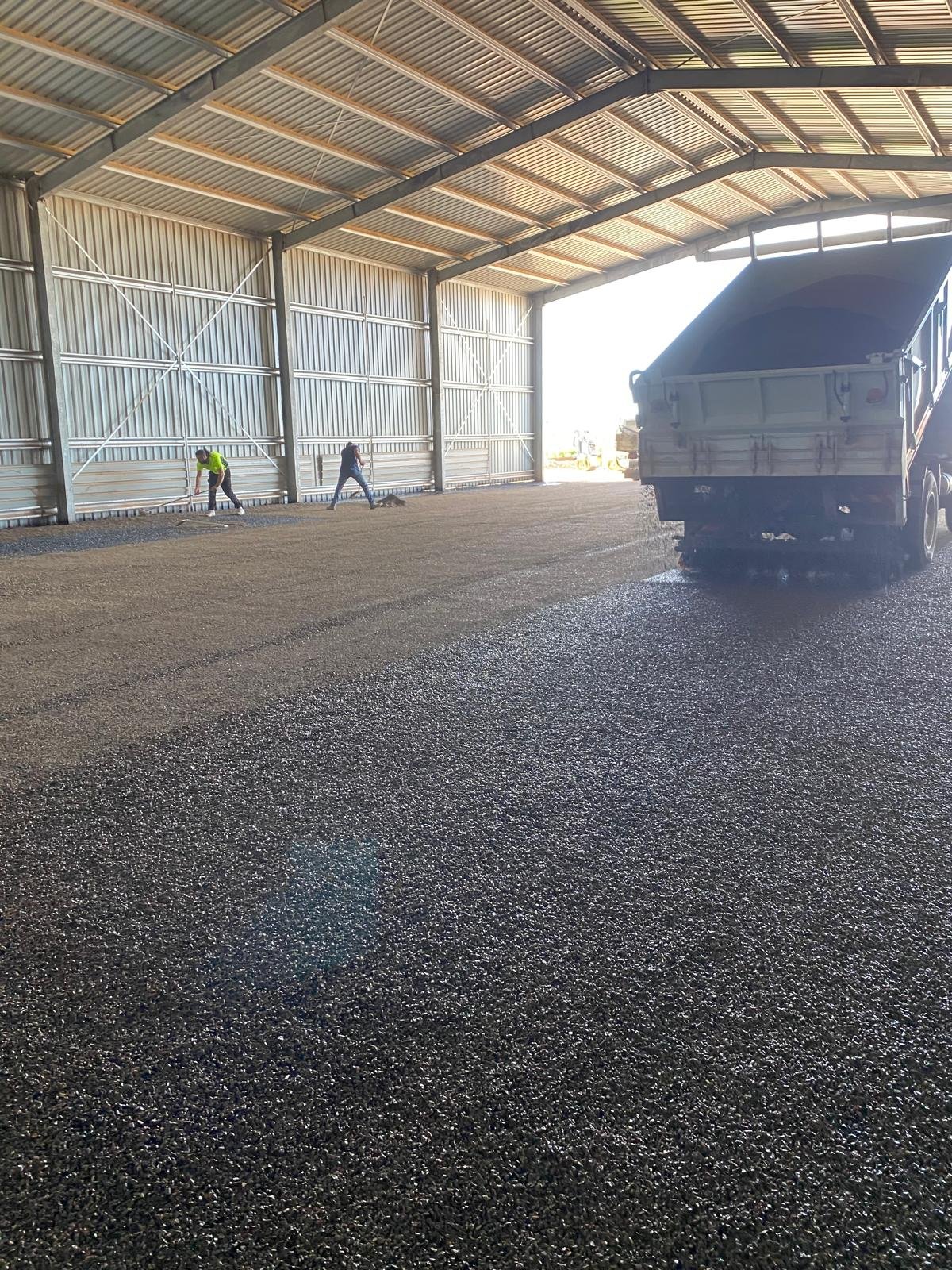
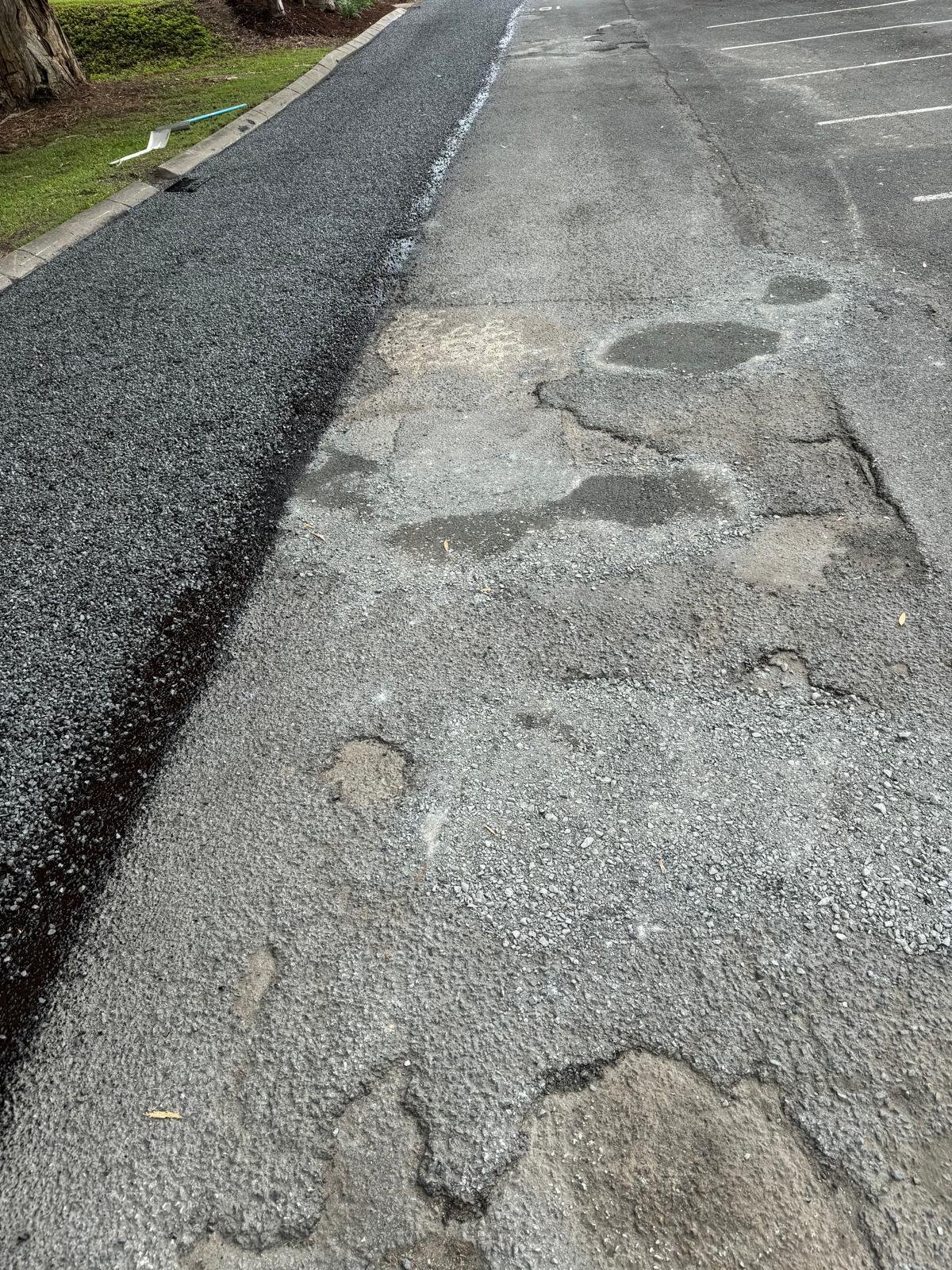
We build new driveways in hot-mix asphalt or sprayed bitumen across Brisbane, Ipswich and the Sunshine Coast, from suburban blocks to long rural drives.
Before we lay a driveway, we check the ground under it carefully. This is because the weight of every car ends up on the base, and if the base is soft, all the work on top can come to nothing.
Send us your address and a rough size through the form, or call 0400 123 222, and we’ll come out, measure up and give you a free quote.
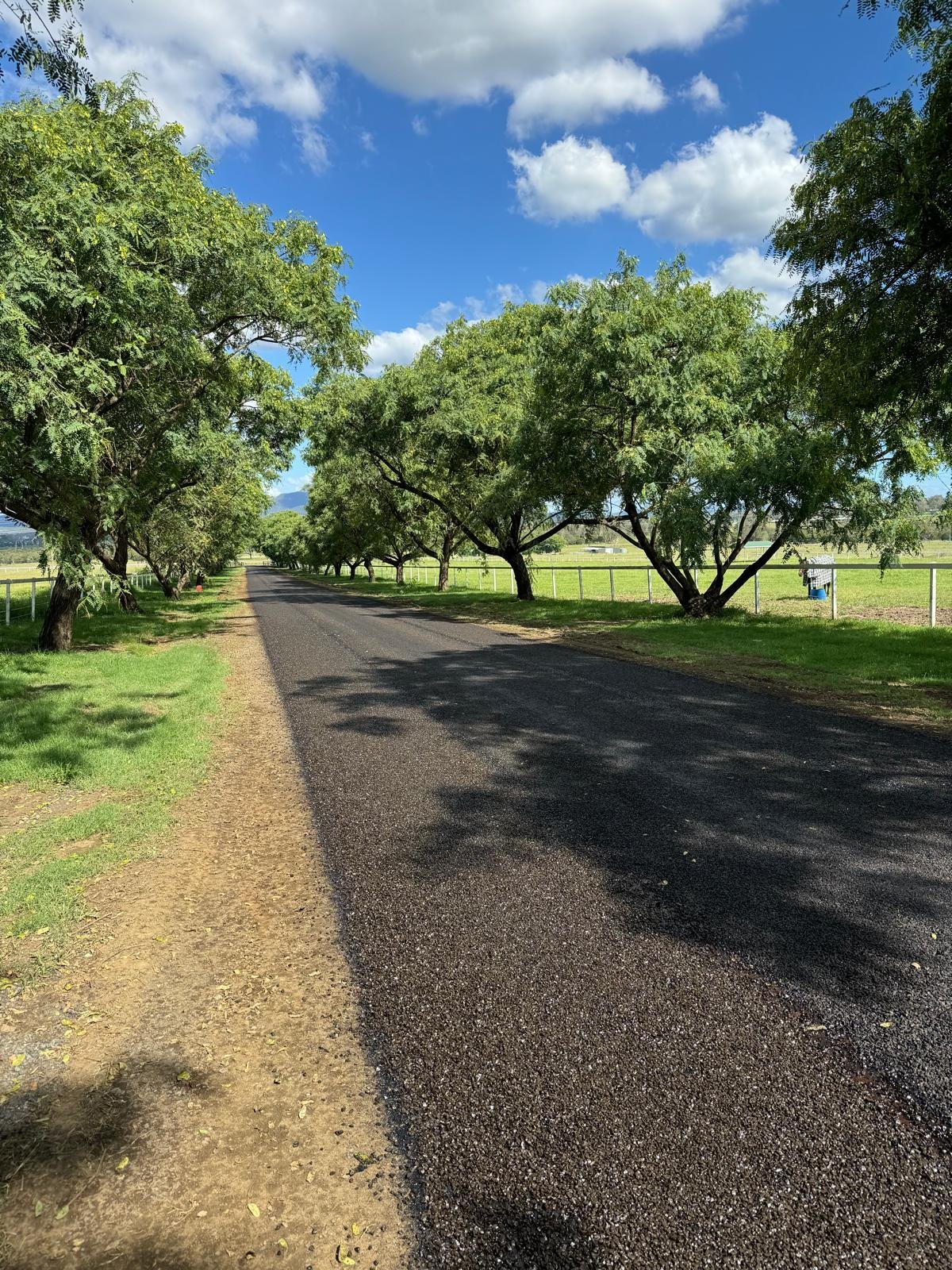
People use the two words for the same thing, but they are different surfaces.
Asphalt is a hot mix of crushed stone and bitumen made at a plant, then spread over the base and rolled into a smooth, dense surface. A bitumen driveway, usually called a spray seal, is a coat of hot bitumen sprayed onto the prepared base and then covered with a layer of stone chips. The stone is pressed into the bitumen by rolling, forming a tough, waterproof, dust-free surface, and many driveways get two coats.
A spray seal is the cheapest way to seal a long rural drive, a farm track or an access road when compared to asphalt or concrete. Asphalt costs more, but its tighter, smoother finish copes better with cars turning on the spot, so it’s the usual pick for suburban driveways. If you can’t decide, we’ll price both when we measure up. Our guide to asphalt and bitumen driveways goes into more detail, and the spray sealing page covers bigger rural jobs.
Whichever surface you choose, the work follows the same order.


What a driveway costs will depend on the ground as well as the size, which is why we measure up before we quote. These are the things that move the number most.
Tell us what you have in mind and we’ll quote each option you’re weighing up. For a fuller list, read the hidden costs of a new driveway.
Fixing a tired old driveway doesn’t always mean ripping it out and starting again. If the base is still firm and the trouble is on top (fading, fine cracks, a few worn patches), the cheaper way is a new layer of asphalt over the old one.
Sinking, cracks in a crazy-paving pattern and puddles that sit after rain are a different story. They mean the base has failed, and a new layer over it only hides the problem for a while.
We’ll tell you which one you’ve got when we measure up. Small areas of damage are covered on our asphalt repairs page, and resurface or replace has the longer version.
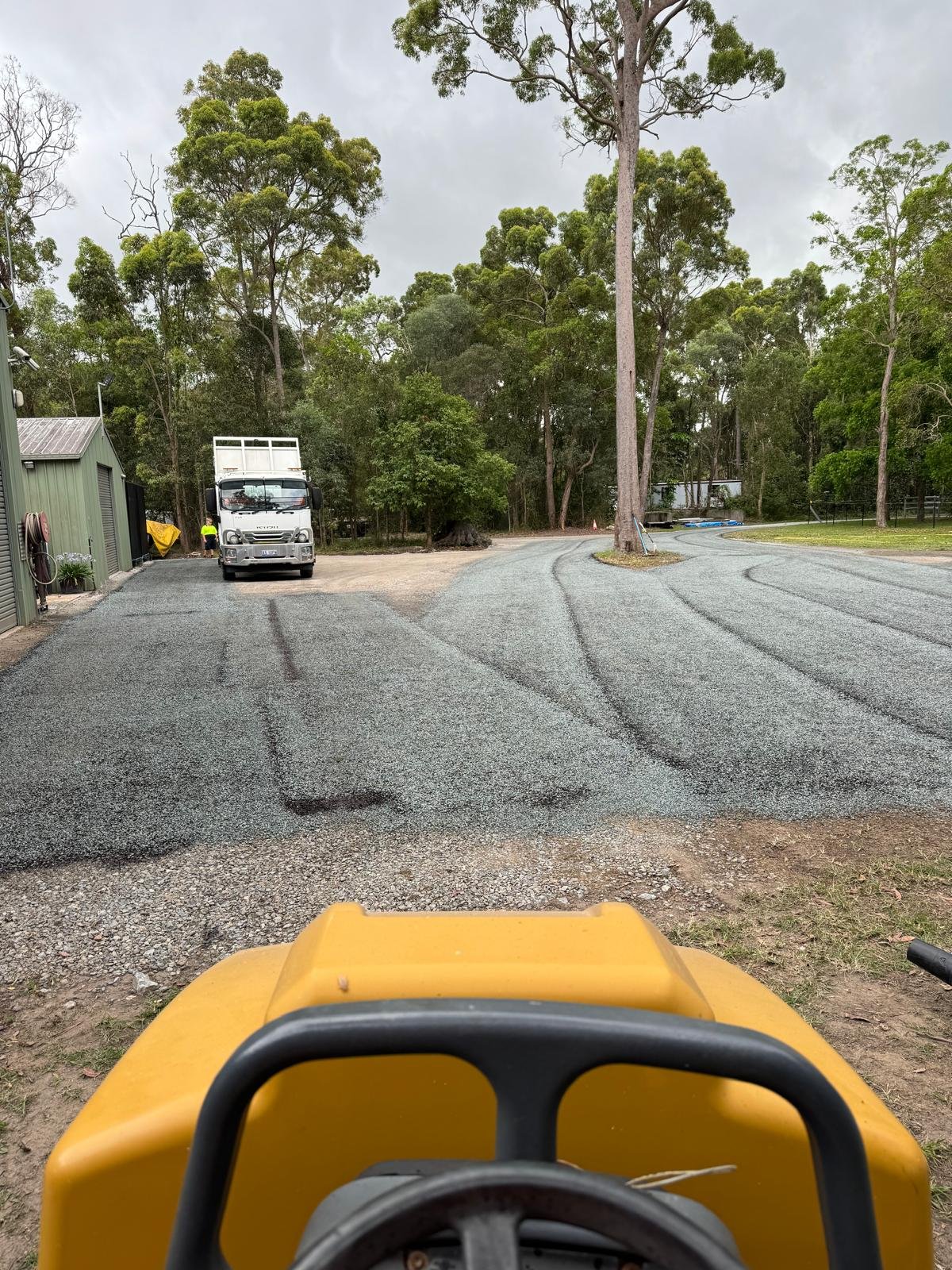
Usually, yes. A spray seal costs less per square metre, which is why it’s popular on long rural drives. It needs resealing sooner, though, and the stones can scuff where cars turn sharply.
It depends on the size, what has to come out first, the ground and the surface you choose, as listed above. Quotes are free, and we measure up first, so the number you get is for your driveway.
Give it at least 24 hours, and longer in hot weather while the surface is still soft. For the first few weeks, try not to turn the steering wheel while the car is standing still.
Over gravel, often yes: it gets regraded, topped up and compacted, and becomes part of the base. Concrete is case by case. A sound slab can sometimes be covered, but its cracks and joints tend to show through, so we’ll look before promising anything.
Yes. We work across Brisbane, Ipswich and the Sunshine Coast, including rural properties. If you’re further out, ask anyway.
The life of an asphalt driveway depends on the base, the drainage and how it’s looked after, but a well-built one typically lasts around 20 years. A spray seal usually needs a reseal well before then.
Tell us the address, roughly how big the area is and whether you’re leaning towards asphalt or a spray seal. We’ll get in touch to arrange a time to measure up.
Want a quick quote or need some help?
Let us point you in the right direction.
© 2024 RC CIVIL OZ Pty LTD.