
- 0 Comments
- 1 Likes
Introduction
Asphalt driveway edging is one of those details property owners often overlook until problems appear. Without proper edge support, asphalt surfaces are vulnerable to cracking, fraying and gradual deterioration along the border zones where the material is most exposed. The right edging protects the structural integrity of the surface and delivers a cleaner, more defined finish. Whether you are installing a new driveway or reinforcing an existing one, understanding your asphalt driveway edging options is a practical starting point. If you are planning asphalt driveway installation, choosing the right edging system early can help protect the surface and extend the lifespan of the driveway.
Why Driveway Edging Matters
The edges of any asphalt surface are its weakest point. Without adequate edge restraint, vehicle loads, ground movement and water runoff gradually weaken the driveway borders, leading to:
- Crumbling and surface separation driveway perimeter
- Uneven borders that worsen under repeated vehicle load
Proper driveway edge stabilisation addresses these vulnerabilities before they develop into more significant repair work.
Protecting Against Vehicle Damage
When tyres repeatedly track along the outer edge of a driveway, unsupported asphalt begins to break away. A concrete kerb or solid border provides the lateral support needed to hold the surface in place, particularly where heavier vehicles use the driveway regularly.
Managing Water Runoff and Erosion
Without defined edging, rainwater runs directly off the asphalt edge and erodes the surrounding soil or sub-base material. Over time, this undermines structural support and accelerates surface deterioration. Good edge design directs water away from vulnerable border zones and supports overall driveway drainage management.
Preventing Vegetation Intrusion
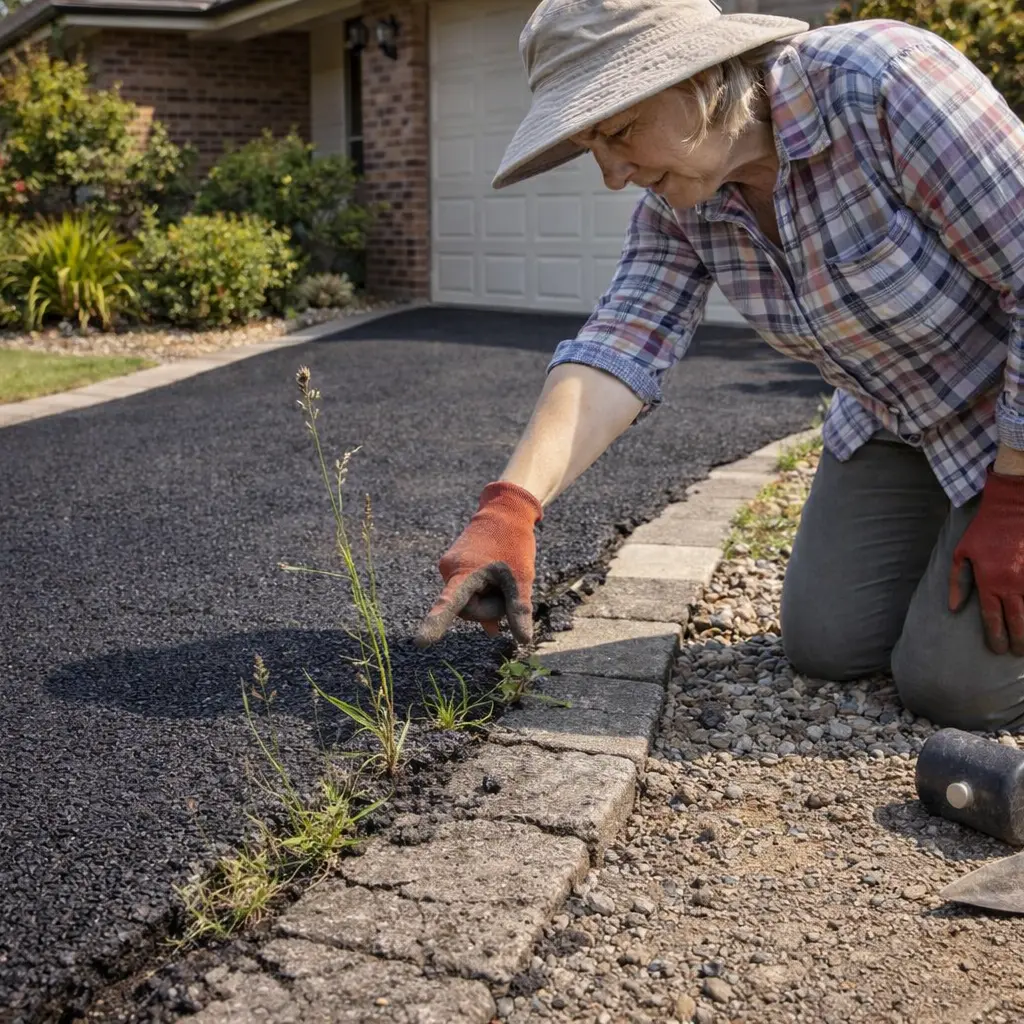
Grass, weeds and root systems will exploit any gap between an asphalt surface and the surrounding ground. Vegetation along driveway edges causes progressive lifting and cracking that becomes increasingly difficult to manage without full edge repair. A continuous edging system eliminates the gaps where growth takes hold.
Concrete Edging and Kerbs
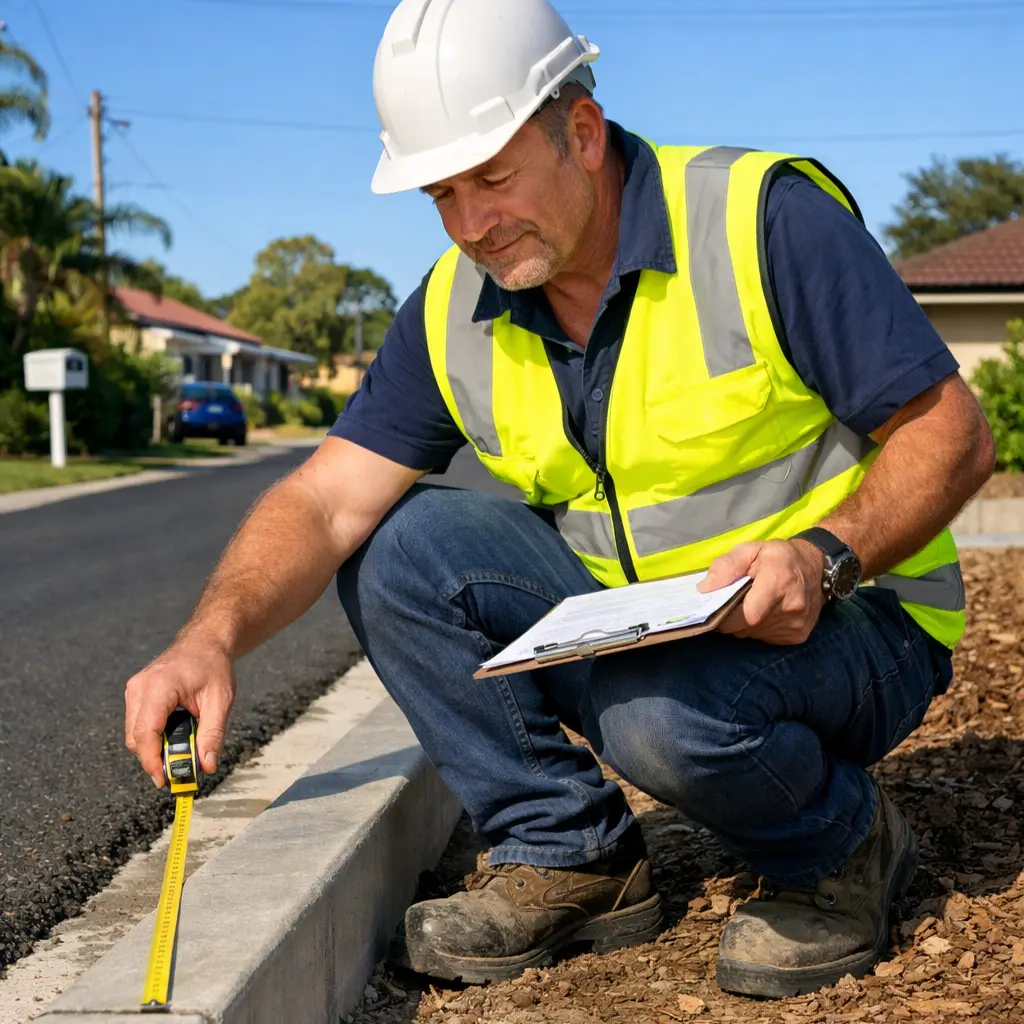
Concrete is one of the most practical edging materials for asphalt driveways. Property owners comparing concrete driveway vs asphalt driveway surfaces often find that both benefit from strong edge restraint. Concrete kerbs are commonly installed alongside asphalt driveways to provide the lateral support needed for long-term surface stability.
Key benefits include:
- Strong lateral restraint along the full driveway edge
- Effective integration with site drainage design
- Suitable for driveways with regular or heavy vehicle traffic
- Cost-effective when installed as part of a new driveway project
Poured or precast concrete kerbs help keep the asphalt surface securely in place. They also assist in directing surface water into proper drainage channels, reducing the risk of pooling near the edges. For those exploring practical and durable asphalt driveway border ideas, concrete edging offers a reliable and structured solution.
Brick Driveway Edging
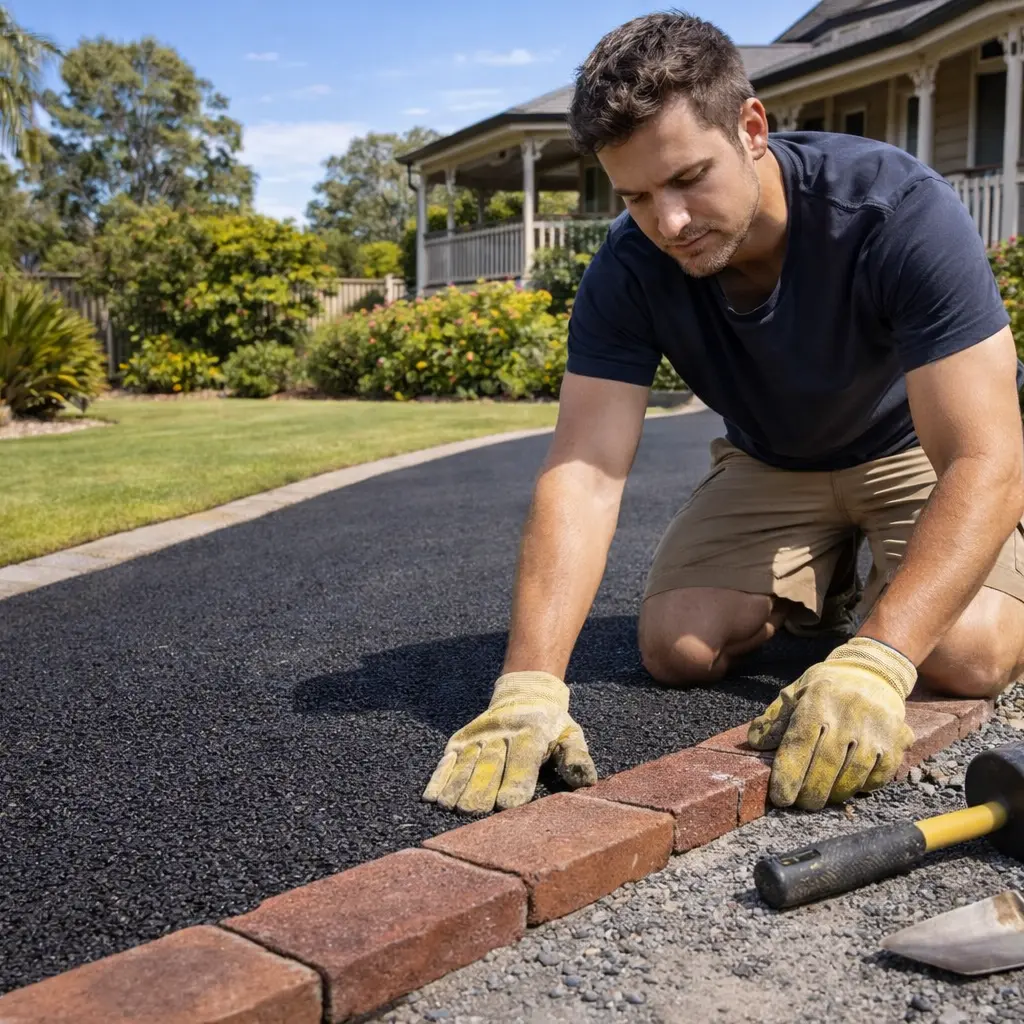
Brick edging suits residential driveways where street appeal and landscape integration are priorities. Highlights include:
- Defines a visual boundary between the asphalt and surrounding garden or lawn areas
- Complements a wide range of Brisbane home styles
- Works well laid flat or on edge, depending on the design intent
Structurally, brick edging performs well when set on a stable concrete bed. Without adequate bedding, individual bricks can shift over time, creating gaps that allow vegetation intrusion and edge instability.
Natural Stone and Decorative Borders
Natural stone driveway borders suit properties where landscaping and surface finishes are part of a broader design approach:
- Durable and visually distinctive finish
- Adds genuine kerb appeal at the driveway entrance
- Well-suited to premium residential properties and commercial premises with a considered presentation
Stone edging typically carries a higher installation cost than concrete or brick alternatives, but delivers a finish that maintains its appearance well over time.
Steel and Metal Edging
Steel edging provides a clean, low-profile border suited to contemporary Brisbane homes:
- Sits flush with or just above the asphalt surface
- Effective at containing asphalt along straight or gently curved edges
- Resistant to ground movement
Over time, many property owners notice their asphalt driveway turning grey due to UV exposure and surface oxidation. While this colour change is mostly cosmetic, proper edging and regular maintenance can help protect the edges where weathering often begins.
In Australian outdoor conditions, powder-coated or galvanised steel options offer better long-term durability than untreated alternatives.
Gravel and Aggregate Containment Edging
Gravel or aggregate borders alongside asphalt driveways help manage drainage and create a natural transition between hard and landscaped surfaces:
- Useful where a gradual surface transition is preferred over a hard edge
- Works best when combined with a solid edge restraint beneath
- Prevents aggregate from spreading onto the asphalt surface over time
Drainage and Site Conditions
Drainage is central to any driveway edging installation. Poorly managed surface water contributes to:
- Edge erosion and sub-base saturation
- Premature surface failure along border zones
- Water pooling near the driveway edge and surrounding structures
Edging design should account for the natural fall of the site, the volume of water the surface is likely to carry and the position of any existing drainage infrastructure. Where conditions are complex or existing water management issues are present, involving experienced contractors early in the planning process avoids costly problems later. RC Civil OZ works across residential and commercial driveway projects and can assess site-specific drainage requirements alongside edging and surface design.
Conclusion
The right asphalt driveway edging protects the structural integrity of your surface, manages water runoff and prevents the edge deterioration that leads to costly repair work. Whether you are considering concrete kerbs, brick borders, stone edging or steel restraints, the choice should be guided by your site conditions, drainage requirements and long-term maintenance expectations. For practical advice on driveway edging options suited to your Brisbane property, RC Civil OZ is ready to help.
Leave Your Comment