

- 0 Comments
- 45 Likes
Introduction
When planning a new driveway, understanding the correct construction depth is essential for long-term performance. The thickness of an asphalt driveway influences how well it supports vehicle loads, adapts to environmental conditions, and maintains overall stability.
A properly designed structure, supported by a well-prepared base, ensures the driveway remains strong and dependable over time. If you are considering asphalt driveway paving services, understanding the correct pavement thickness is essential for long term durability.
Factors That Affect the Right Thickness
Several conditions influence how thick a residential asphalt driveway should be. These factors should be evaluated before construction begins to ensure the surface performs well under daily use.
Soil and Sub Base Preparation
The ground beneath the driveway forms the foundation for the entire structure. Proper sub base preparation ensures the surface remains stable and performs reliably over time.
A well-compacted aggregate base provides the structural support needed for the asphalt layer above, helping distribute loads evenly and maintain overall integrity. Careful preparation also improves stability and supports consistent performance under regular use.
In addition, proper drainage planning within the sub-base helps prevent water buildup, reducing stress on the structure and contributing to long-term durability.

Vehicle Load and Traffic
Vehicle weight plays an important role in determining the required thickness of the asphalt layer.
Driveways used mainly for passenger vehicles usually require moderate pavement depth. However, areas that regularly support heavier vehicles, such as service vans or work trucks, may need a stronger structure.
Greater load capacity ensures the surface can handle repeated stress without deformation or cracking.
Climate and Weather Exposure
Environmental conditions also influence pavement performance. Temperature changes cause asphalt materials to expand and contract over time.
Extended heat exposure, moisture and seasonal temperature shifts can place stress on the surface. When the pavement depth is sufficient, these stresses are absorbed more effectively, reducing the likelihood of cracking or structural movement.
Adequate construction depth helps improve durability under changing weather conditions.
Standard Thickness of Asphalt Driveway
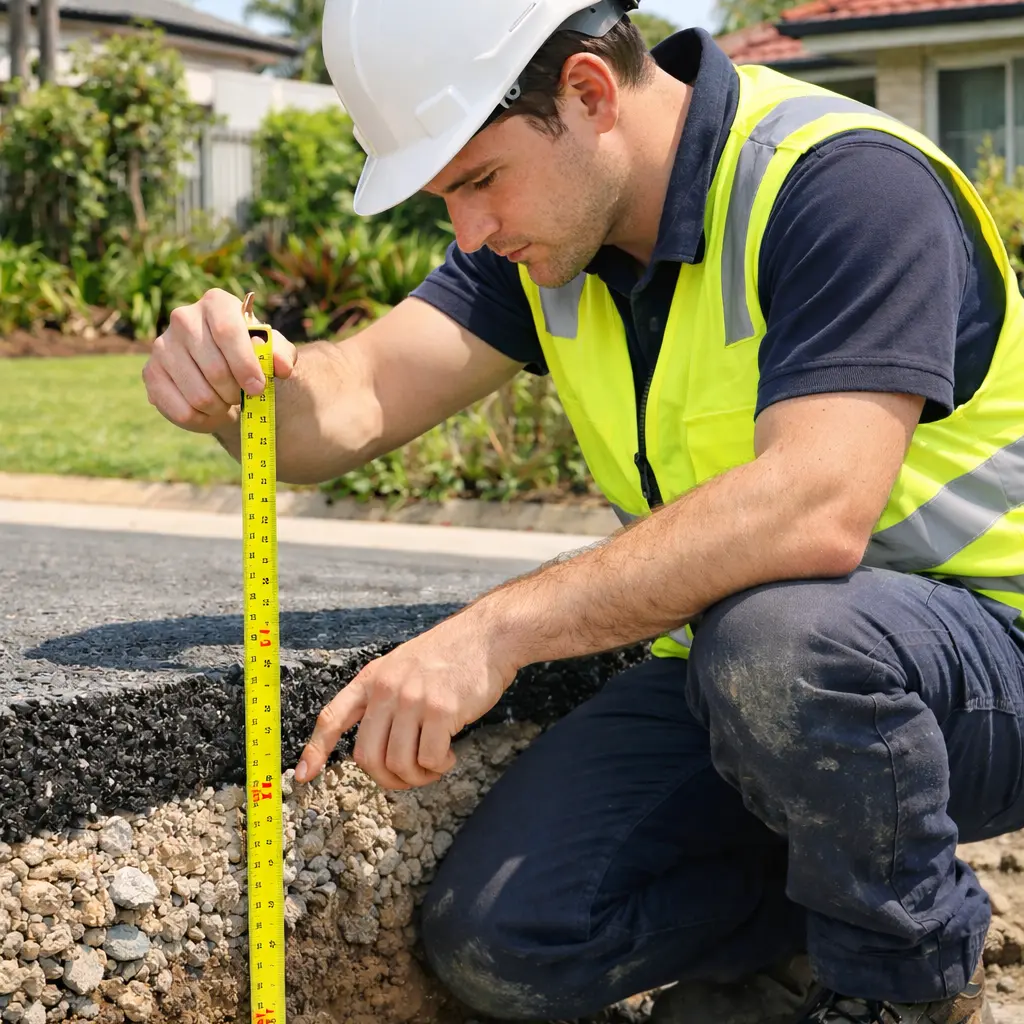
Residential driveway construction normally includes both asphalt layers and a strong base foundation beneath.
A typical driveway structure includes:
- Compacted aggregate base for structural support
- Asphalt base layer that distributes load
- Surface layer providing a smooth driving finish
When installed correctly, this structure provides the strength required for normal residential traffic while maintaining surface stability.
Property owners planning asphalt driveway paving in Brisbane should ensure the design considers soil conditions, drainage and expected vehicle use before installation begins.
Avoiding Cracks and Surface Damage
Proper construction depth is essential for maintaining the strength and durability of asphalt surfaces. When pavement layers are too thin, they cannot effectively absorb and distribute repeated vehicle loads. This leads to structural stress, which gradually causes surface cracking, deformation, and accelerated wear.
Thin asphalt layers are particularly vulnerable to damage, as they allow pressure to build within the surface. Over time, this can result in uneven areas, localised sinking, widening cracks, and an increased risk of potholes. Water can also enter through these openings, weakening the underlying foundation and speeding up overall deterioration.
If cracks are not addressed early, they may collect soil and debris, creating conditions where weeds growing through asphalt driveway surfaces can develop. This not only affects the appearance but also further weakens the pavement structure.
Ensuring the correct depth during installation, along with timely repairs and regular maintenance, helps reduce these risks. A well-constructed pavement provides better load distribution, improves durability, and supports long-term performance.
Making Smart Choices for Long-Lasting Driveway Performance
Selecting the appropriate asphalt thickness is an important part of driveway planning. Every surface must be designed to handle expected vehicle loads while withstanding environmental stress. This involves careful consideration of base preparation, material depth, and drainage to ensure the structure performs reliably over time.
A durable driveway depends on more than just the visible surface. Proper installation, including a well-compacted base and correctly layered materials, plays a key role in preventing issues such as cracking, deformation, and premature wear. Construction methods should also be suited to specific site conditions, whether for residential, commercial, or industrial use.
With the right planning and attention to detail during installation, the finished surface becomes more resilient and better equipped for long-term use. Ongoing maintenance and timely repairs further support durability, helping extend the lifespan of the driveway and maintain its overall performance.
Conclusion
Understanding how thick an asphalt driveway should be helps property owners make informed decisions before construction begins. Proper depth improves durability, distributes vehicle load effectively and protects the pavement from environmental stress. Combined with strong base preparation and routine maintenance, a well constructed driveway can perform reliably for many years. If you are planning a new driveway or noticing early surface issues, speaking with the experienced team at RC Civil OZ can help ensure the right construction approach is used for your property.
Leave Your Comment