
- 0 Comments
- 65 Likes
Introduction
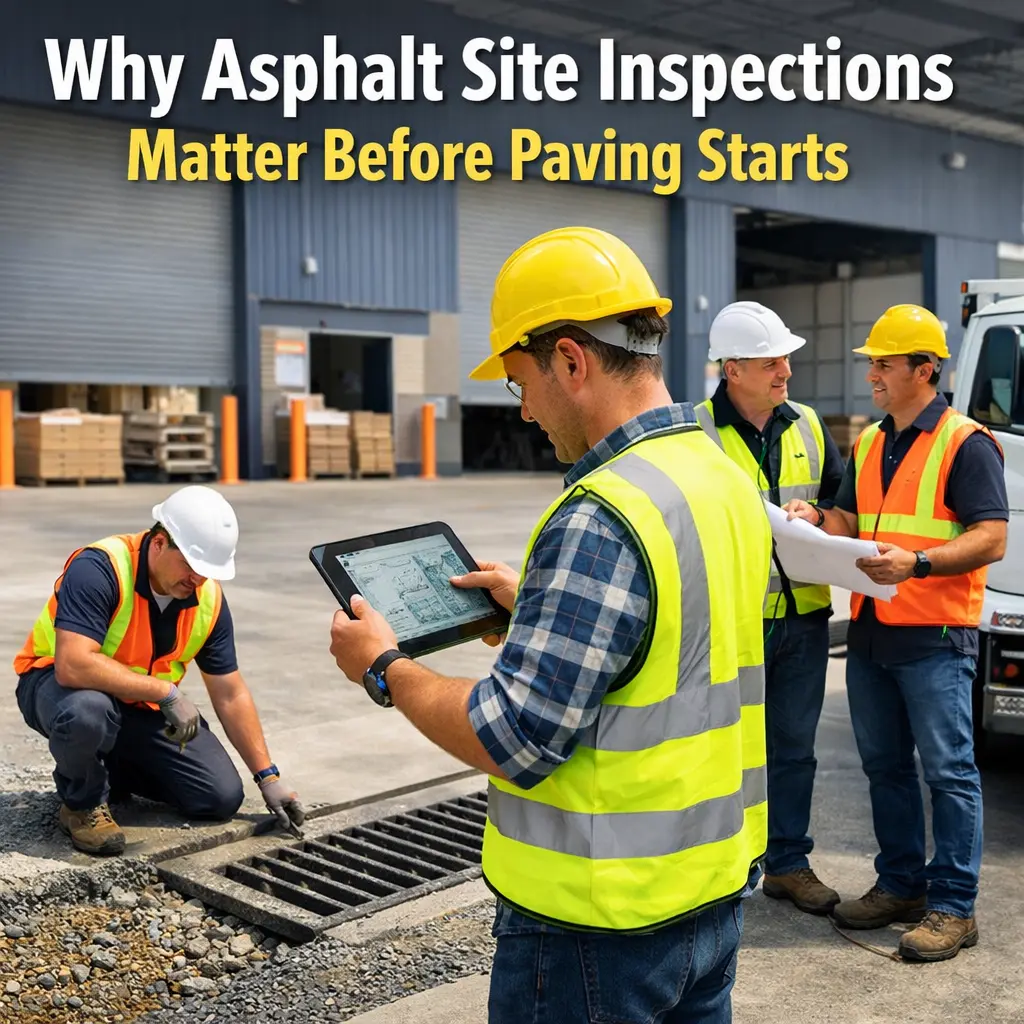
Many property owners assume asphalt paving begins when hot asphalt is laid, but long-lasting pavements are decided well before that point. An asphalt inspection carried out before paving starts plays a critical role in ensuring the surface performs as expected for years to come.
A proper asphalt inspection allows site conditions to be assessed early—before minor issues turn into expensive failures. From base preparation and drainage planning to compaction checks, this process protects both residential driveways and high-traffic commercial areas. Understanding why asphalt inspections matter helps property owners make informed decisions and ensures paving work delivers genuine long-term value.
Understanding the Purpose of an Asphalt Inspection
An asphalt inspection is more than a visual check—it evaluates the conditions beneath the surface that directly affect pavement performance. Before paving begins, factors such as soil stability, moisture levels, slope, and intended traffic loads are carefully reviewed. In Brisbane’s climate, this assessment is essential for preventing water infiltration and premature surface deterioration.
By identifying risks early, inspections ensure the asphalt paving preparation process aligns with Australian construction standards and site-specific requirements. This step sets the foundation for strong, reliable surfacing that can handle both daily use and extreme weather conditions.
How Site Preparation Impacts Asphalt Performance
Asphalt site preparation determines how well a surface will hold up over time. Poor preparation often leads to settlement, cracking, or drainage failures within just a few years. An inspection confirms whether excavation depths, driveway site preparation, and sub-base materials are suitable for the site’s conditions.
For Brisbane properties, reactive soils and heavy rainfall make proper preparation especially important. Ensuring the asphalt sub-base preparation is stable and evenly compacted helps protect against movement and surface fatigue once paving is complete.
Checking the Base Layer Before Asphalt Installation
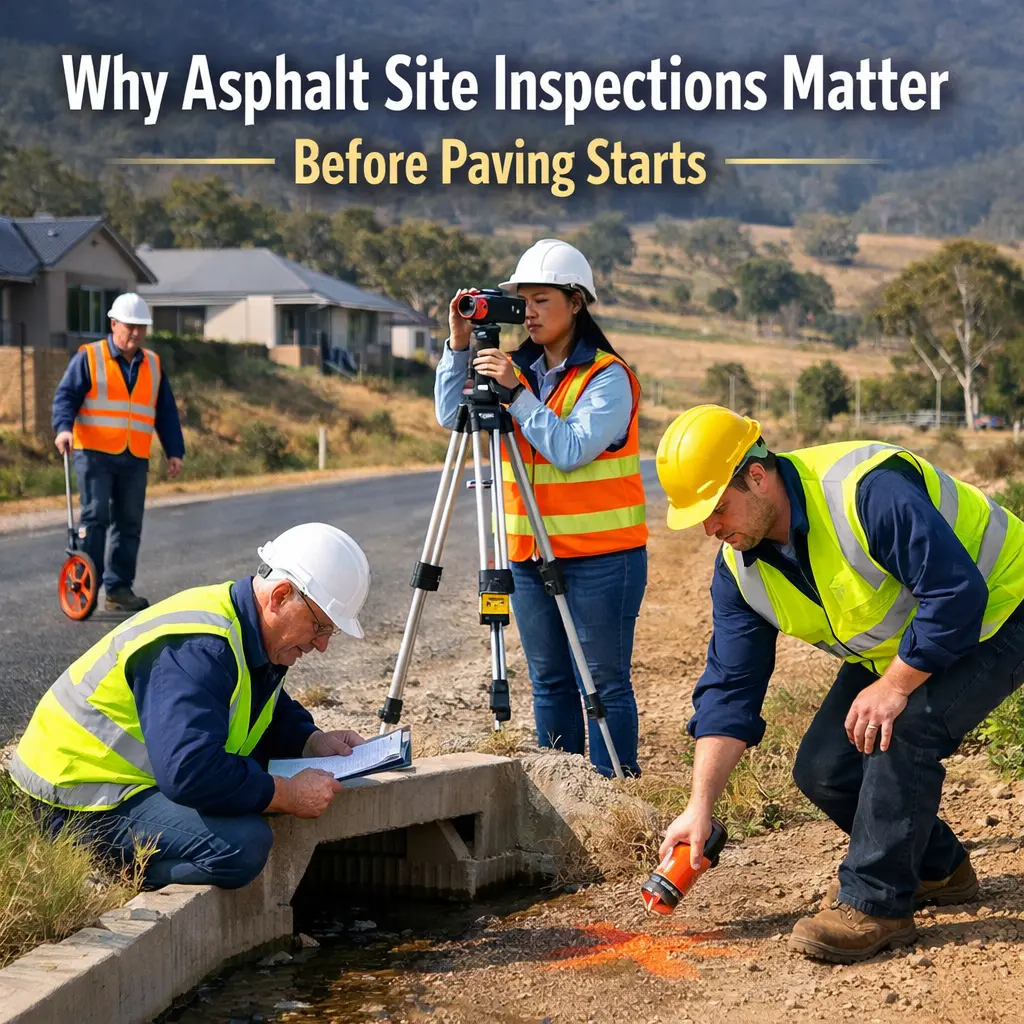
The base layer supports the entire pavement structure, so inspecting it before asphalt base layer installation is critical. Uneven or poorly compacted bases allow movement under traffic loads, leading to surface deformation.
During inspection, attention is given to material quality, compaction levels, and grading accuracy. This process ensures the base can support residential vehicles, commercial traffic, or heavy industrial use without compromising long-term durability.
Identifying Existing Surface and Subsurface Issues
For resurfacing or repairs, asphalt surface inspection helps uncover hidden problems beneath older pavements. Signs such as uneven settlement, soft spots, or repeated cracking often indicate deeper issues within the base or subgrade.
A thorough pavement condition assessment ensures these problems are addressed before new asphalt is laid. This avoids repeating failures and ensures repairs deliver lasting performance rather than short-term cosmetic improvement.
Quality Control and Compliance Before Paving
An asphalt inspection also confirms that paving plans meet quality control and compliance requirements. This includes reviewing asphalt paving quality control measures, pavement density testing, and material specifications.
Construction inspection documentation helps verify that each stage aligns with road construction quality standards and local regulations. This level of oversight provides confidence that paving will meet safety expectations and deliver consistent results across residential, commercial, and car park surfaces.
The Cost Benefits of Early Asphalt Inspections
While inspections may seem like an added step, they often save property owners high costs in the long run. Detecting issues early reduces the likelihood of significant repairs, surface replacements, or ongoing maintenance problems.
By ensuring the asphalt paving preparation process is done the first time correctly, inspections help extend pavement lifespan and reduce disruption caused by premature failures, significant for commercial and industrial sites with constant vehicle movement.
Conclusion
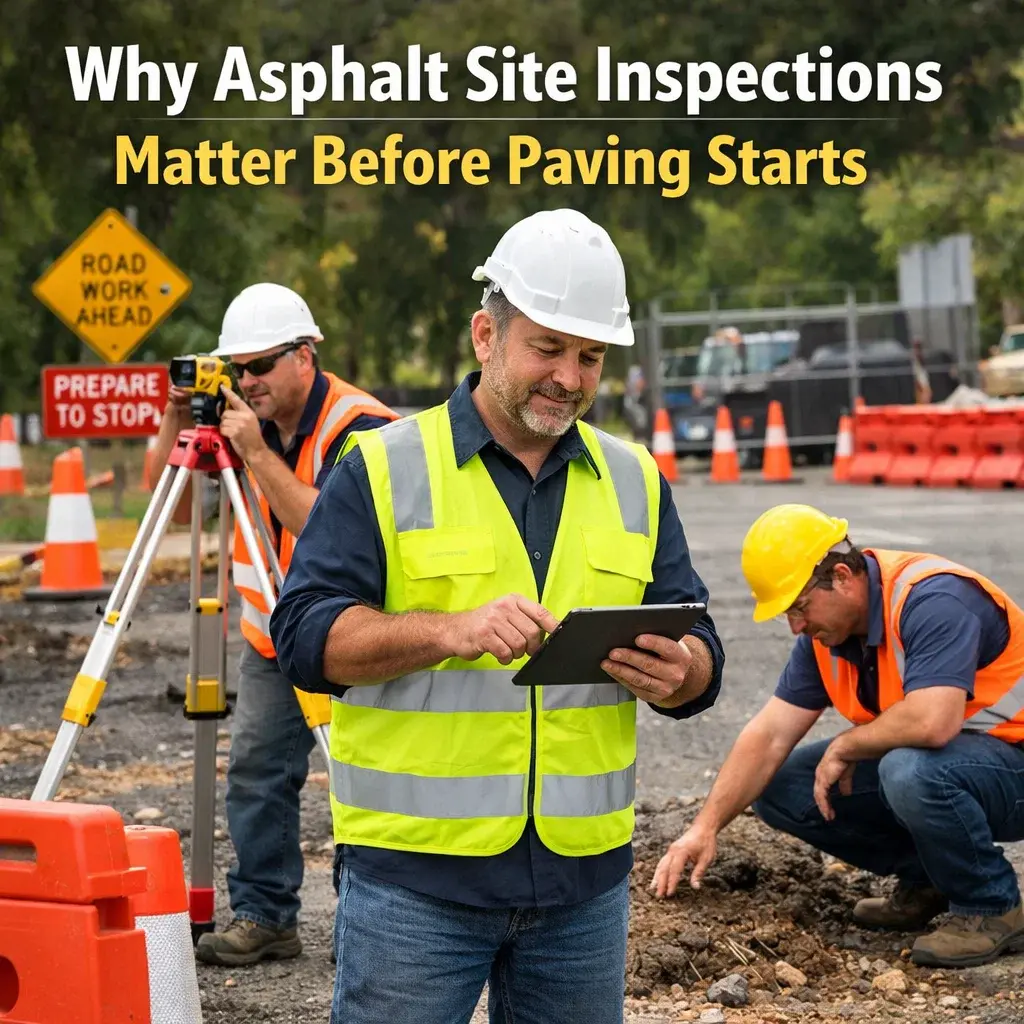
Asphalt site inspections are a vital part of successful paving, particularly in Brisbane’s demanding climate. By assessing preparation, drainage, base conditions, and compliance before paving begins, inspections protect against early failure and costly repairs. A well-inspected site leads to smoother surfaces, improved safety, and longer-lasting performance when overseen by an experienced civil and paving contractor. RC Civil OZ delivers expertly planned asphalt and bitumen solutions built to withstand heat, rainfall, and heavy use. Contact us to book a site inspection and achieve durable, long-lasting asphalt results tailored to your property.
Leave Your Comment