
- 0 Comments
- 49 Likes
Introduction
A sinking driveway does not fail overnight. It settles gradually, shows early signs that are easy to overlook, and by the time the problem is obvious, the damage beneath the surface is already significant. Most uneven driveway repairs that fail do so because they treated the symptom rather than the cause. Filling a dip or patching a crack without understanding what drove the movement produces a result that needs redoing within a season or two. This guide covers why driveways sink, how to identify what is actually causing it, and what fixing it properly involves from the ground up.
Why Driveways Sink: Getting to the Real Cause
Subsidence is always a below-surface problem. The pavement itself does not cause the sinking. What causes it is the loss of stable support underneath, and that support fails for specific, identifiable reasons.
Poor Subbase Installation
The subbase is the compacted layer sitting between the natural ground and the driveway surface. When it is laid too thin, compacted inadequately, or built from poorly graded material, it shifts under repeated vehicle loading over time. The surface above tracks that movement, producing the dips, cracking, and unevenness that become visible years after installation.
The fix requires excavating the affected area, rebuilding the subbase to the correct depth and compaction standard, and reinstating the surface properly above it. Any repair that skips this step will reproduce the same problem.
Water Damage and Drainage Failure
Water infiltrating beneath a driveway gradually erodes subbase material and softens the subgrade below. Over time, the support becomes uneven, and sections of the pavement begin sinking toward the voids left by that erosion. Pooling water on or beside the driveway after rainfall is an early indicator that drainage is not performing as it should.
The drainage issue driving the erosion must be resolved before any surface is reinstated. Whether that means installing channel drains, improving surface fall, or addressing stormwater management around the driveway perimeter, fixing the drainage first is what prevents the same failure from recurring.
Soil Movement and Reactive Ground Conditions
Clay-heavy soils expand when saturated and contract significantly during dry periods. That seasonal movement places pressure on the pavement structure, gradually displacing base material and producing uneven settling across the surface. In parts of Australia where reactive soils are common, this is a significant and recurring contributor to driveway subsidence.
Where soil reactivity is the cause, subgrade stabilisation or treatment is required before a new base is laid. Reinstating the pavement over reactive ground without addressing the soil conditions will produce the same result over successive wet and dry cycles.
Tree Root Intrusion
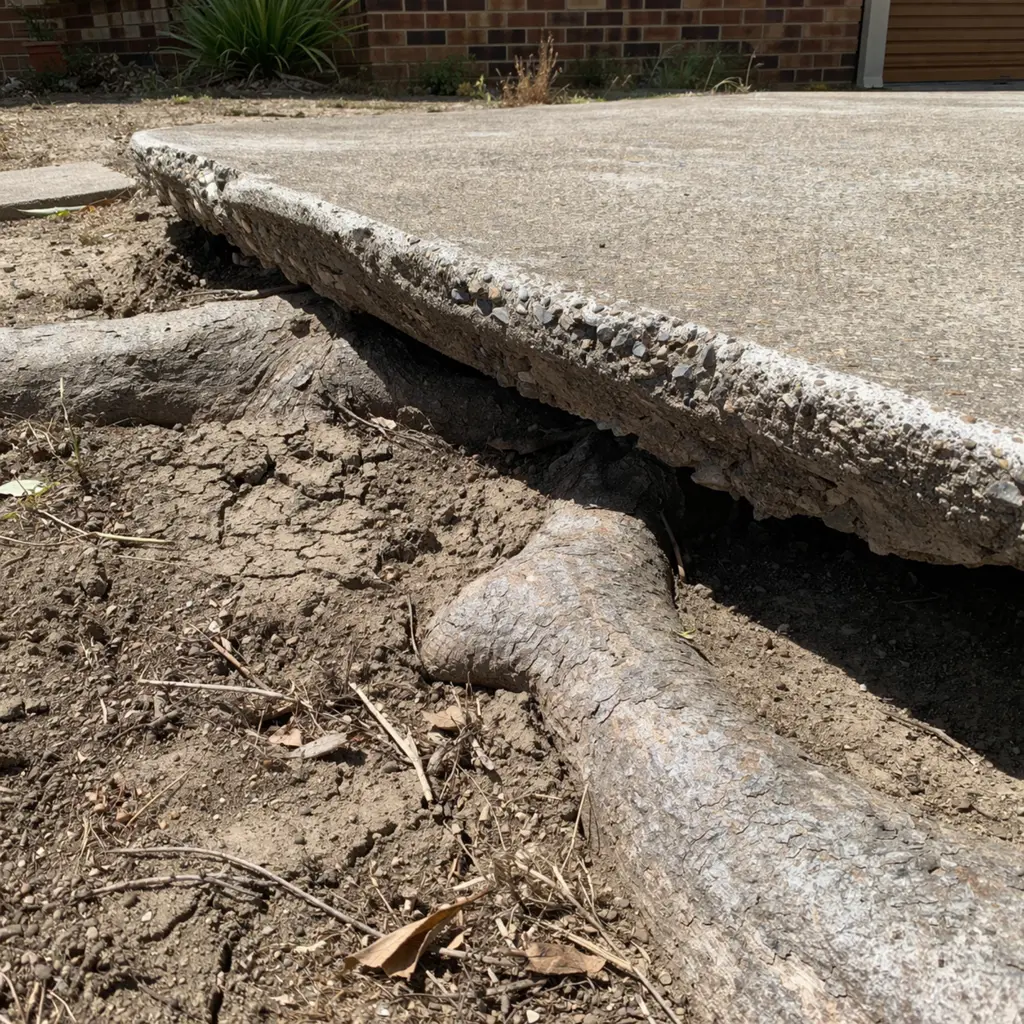
Tree roots growing beneath a driveway lift and displace the pavement from below, creating raised sections alongside sunken ones and producing a progressively worsening uneven surface. The damage pattern is usually identifiable from above, with cracking and displacement concentrated near the tree line.
Fixing root-related damage requires removing or cutting back the intruding roots, repairing the displaced base material, and reinstating the surface. Where roots are likely to regrow, root barrier installation before the new surface is laid is worth considering as part of the repair scope.
Heavy Vehicle Loading on an Underspecified Driveway
A driveway built for passenger vehicles will compress and sink under repeated heavy vehicle use. Trucks, machinery, and loaded trailers concentrate significant downward and lateral force on the pavement, particularly through turning movements. Where the subbase was not designed to carry that load, compression and sinking develop in the areas of greatest stress. Understanding factors such as concrete driveway durability under different load conditions can help explain why some driveways fail prematurely under heavier use.
Rebuilding to the same standard that failed under the same loads will produce the same outcome. The reinstated pavement structure needs to be specified for the traffic it will actually carry, not simply matched to what was there before.
Warning Signs Worth Acting On Early
The earlier subsidence is identified, the more targeted and cost-effective the repair. Signs that indicate base movement rather than surface-only deterioration include:
- Visible dips or depressions that were not present when the driveway was new
- Cracking that follows a pattern consistent with base settlement rather than surface shrinkage
- Pooling water in areas that previously drained without issue
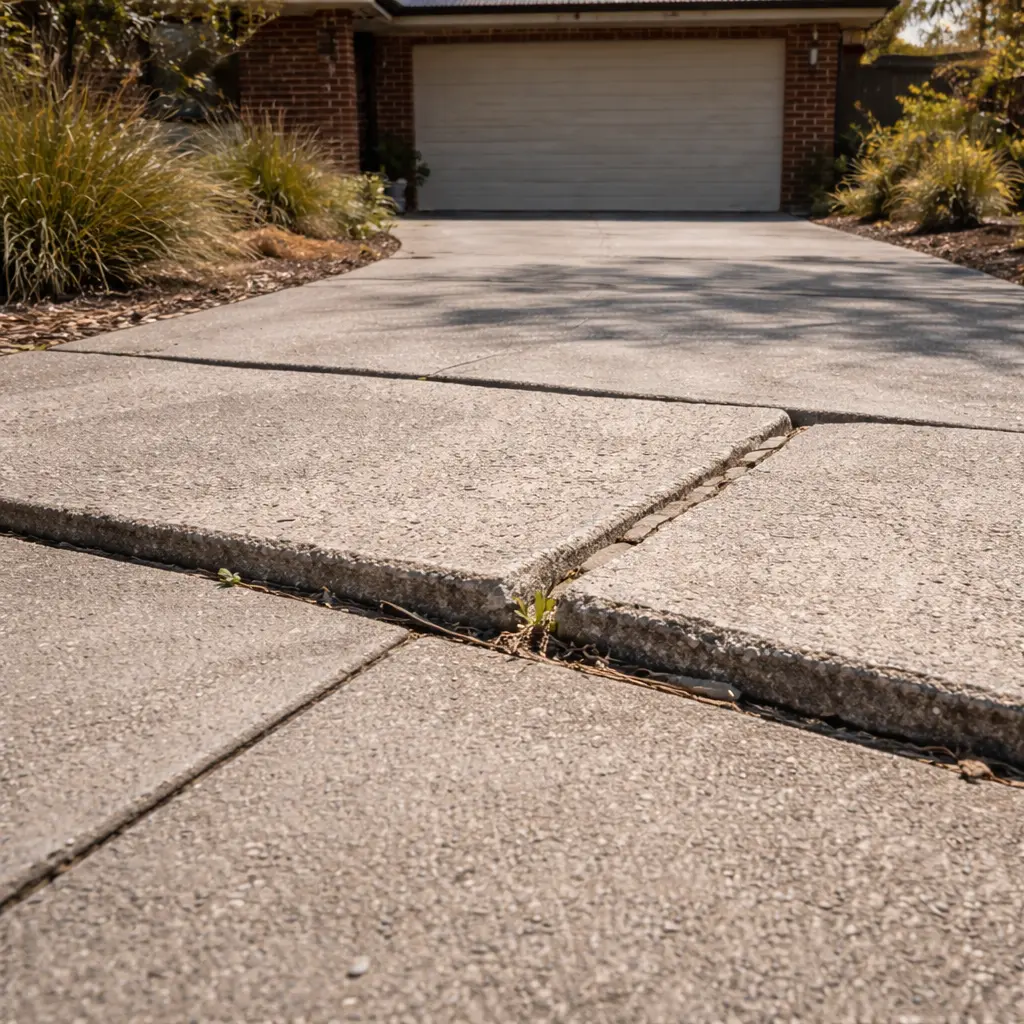
- Unevenness at joints or edges where sections have dropped relative to each other
- A soft or spongy feel in areas that should be firm underfoot
- Surface displacement concentrated near trees or garden beds
Each of these points points toward a below-surface cause. A surface patch applied over any of them will not hold.
How Sinking Driveways Are Fixed Properly
The repair method depends on the extent and cause of the damage, but the principle is consistent: the cause beneath the surface must be addressed before reinstatement above it. For localised base failure, the process typically involves:
- Saw cutting and removing the affected surface area
- Excavating to expose and assess the base and subgrade condition
- Correcting subgrade conditions where soil movement or saturation is present
- Reinstating the subbase to the correct depth and compaction standard
- Relaying the surface material to the appropriate thickness and finish
If a driveway is showing signs of sinking or unevenness, a proper assessment can help identify the underlying cause before any work begins and provide a clear understanding of what the repair needs to involve.
When Full Reconstruction Is the Right Answer
Where base failure is widespread, drainage issues have caused extensive subgrade erosion, or the original construction was insufficient for the loads placed on it, targeted repair will not be enough. Full reconstruction means removing the existing surface and base entirely, treating or stabilising the subgrade where needed, and building the full pavement structure to the correct specification from the ground up. For a clearer perspective on whether resurfacing or full replacement is the better option in different situations, it helps to compare how each approach performs under varying structural conditions.
Repeated patching on a driveway that needs reconstruction will cost more over time and produce compounding disruption with each intervention. Addressing it properly once is the more practical and cost-effective outcome.
Conclusion
Fixing a sinking or uneven driveway properly means starting below the surface. The cause determines the repair, and a repair that does not address the cause will not last. Whether the issue is base failure, drainage erosion, reactive soil, root intrusion, or load-related compression, each has a specific fix that goes beyond what a surface patch can achieve. A sinking driveway requires a clear assessment to identify the cause and determine the correct solution. RC Civil OZ can evaluate the issue and recommend the most effective course of action.
Leave Your Comment