
- 0 Comments
- 45 Likes
Introduction
Strong driveway construction always starts with strong preparation. Driveway preparation is the stage that shapes how the surface will perform under daily use, how well it handles weather and how long it lasts before major work is needed again. Skipping or rushing this phase often shows up later as movement, cracking or drainage problems. Whether the project covers a private home, a commercial entrance or a shared access area, the work done before construction begins influences the entire outcome. This guide walks through the key steps for preparing property for driveway works the right way.
Start With a Clear Plan
Every driveway project benefits from focused thinking at the planning stage. Decisions made here influence cost, layout, drainage and long term performance.
Define the Purpose of the Driveway
Before any work is scoped, the driveway’s role on the property should be considered. Practical questions to think through include:
- How many vehicles will use the driveway daily
- Whether trailers, caravans or commercial vehicles will park on it
- Whether visitor parking or a turning space is needed
- How the driveway will connect with garages, sheds or carports
- Whether future property changes might affect the layout
A clear purpose helps shape the final design and avoids reactive changes once construction is underway.
Consider Layout and Flow
The shape of the driveway plays a major part in how usable it feels day to day. A straight layout suits narrow blocks, while curved or wider designs may suit larger frontages with more room to work with. Turning circles, vehicle entry angles and pedestrian paths all need to flow naturally. Time spent on layout at the planning stage prevents awkward access issues once the surface is laid.
Carry Out a Site Assessment
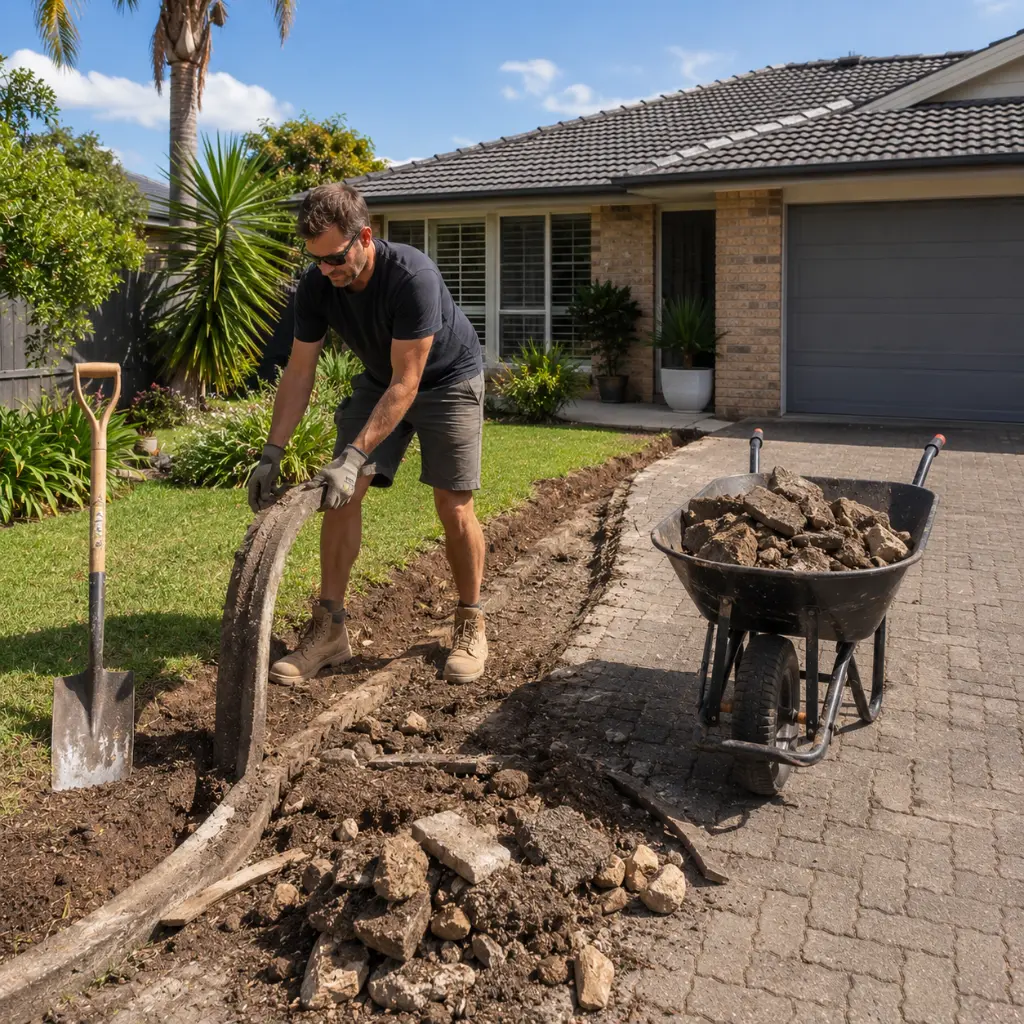
A site assessment confirms whether the proposed design is realistic for the actual conditions on the property. This step often shapes the final scope of work more than the original concept. On properties with an existing surface, old driveway removal is often the first practical step before proper assessment and base preparation can begin.
Soil and Terrain Review
The condition of the ground beneath the future driveway affects everything that follows. Soft soils, reactive clays or unstable ground may call for additional preparation. A site review typically looks at:
- Soil composition across the proposed driveway area
- Existing levels and natural slope
- Zones with water pooling or saturated ground
- Tree roots that may interfere with the work
- Existing surfaces, edges and adjoining structures
Reading these conditions early helps guide decisions on excavation depth, sub base build up and drainage solutions.
Drainage Assessment
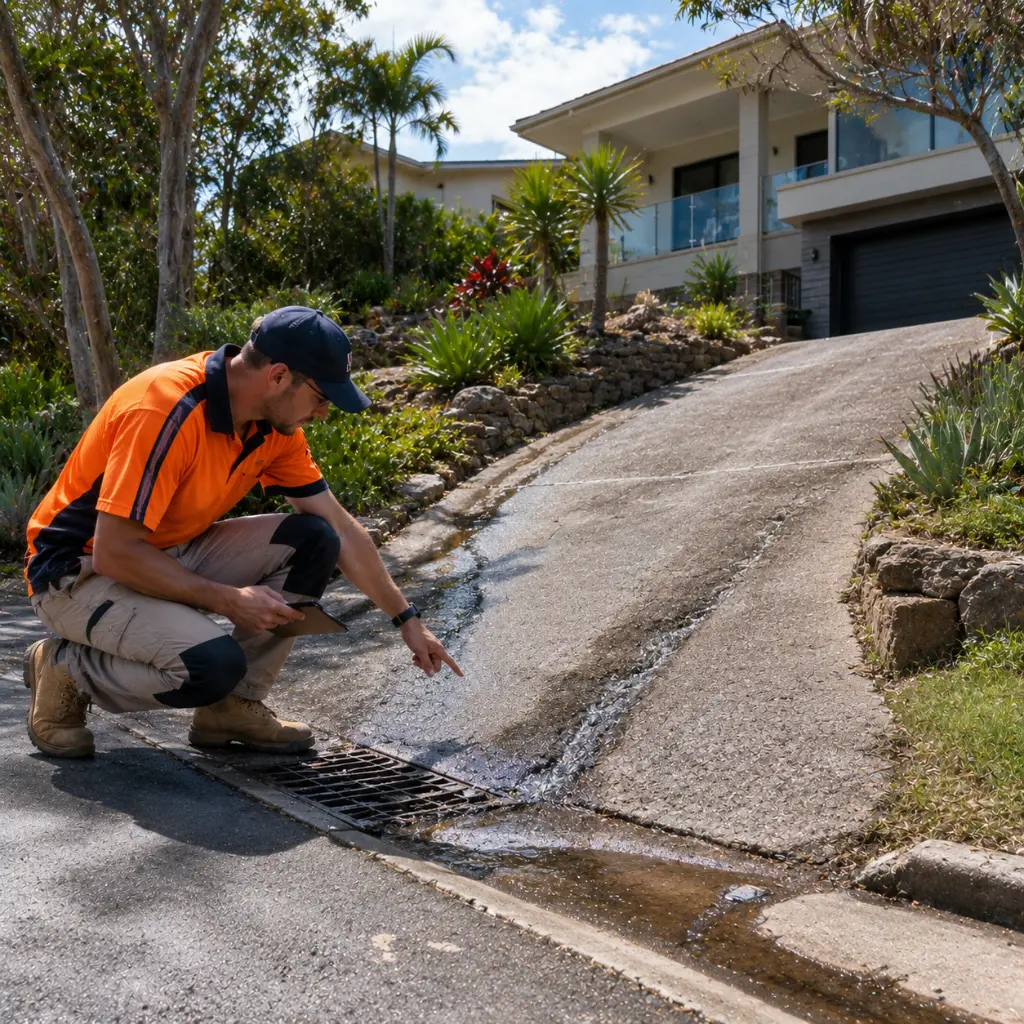
Drainage is one of the most important considerations at the preparation stage. A driveway built without proper drainage planning will trap water, place stress on the base layers and reduce overall surface lifespan. Reviewing how water moves across the property allows the design to direct runoff away from the driveway, the home and any nearby structures.
Check Council Requirements
Driveway works often involve approvals depending on location and the type of work planned. Local council standards commonly govern crossover regulations, gradient requirements and driveway width limits. Property owners should confirm:
- Whether a driveway permit is required
- What setbacks and crossover specifications apply
- Whether the works affect public footpaths or kerbs
- Any restrictions tied to heritage or environmental zones
Sorting these matters out before construction begins avoids delays and rework once the project is in motion.
Identify Underground Services
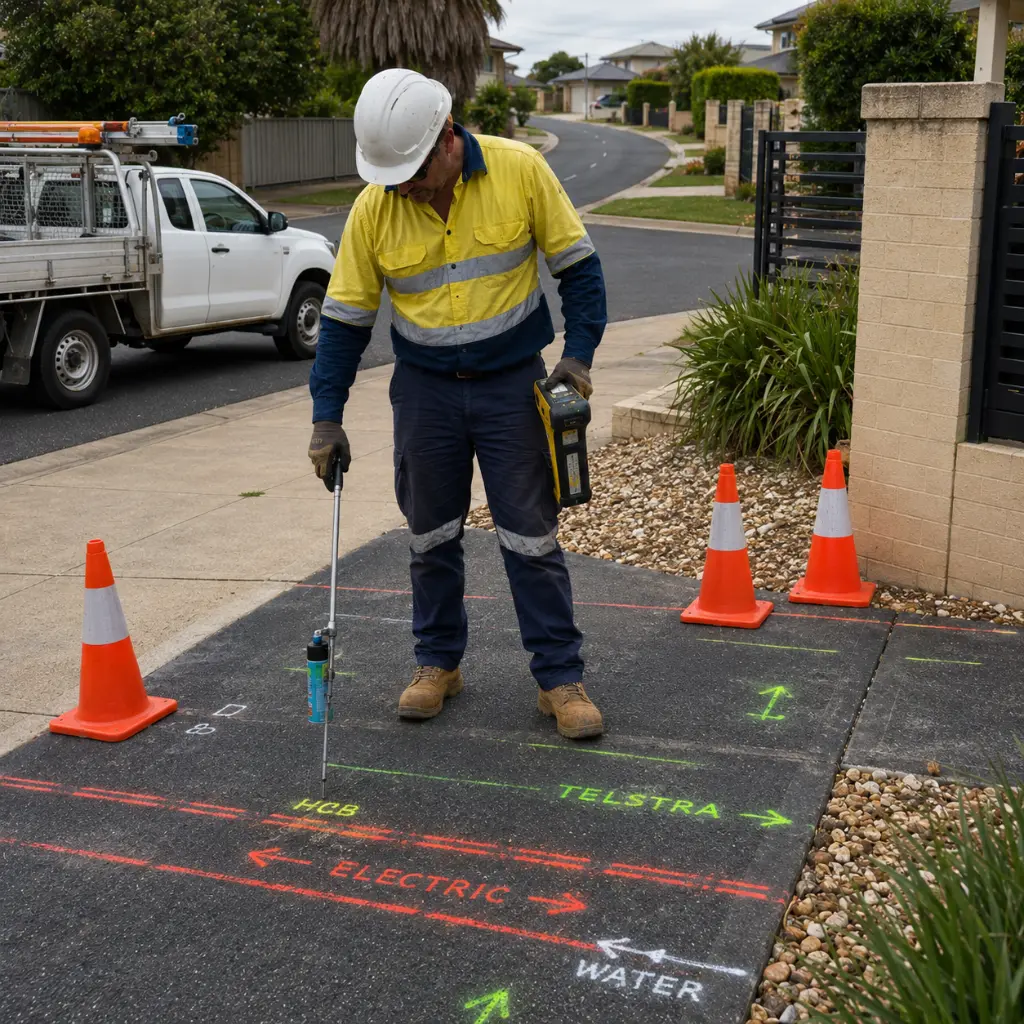
Driveway zones often sit above water, gas, stormwater, electrical and telecommunication lines. A service identification check ensures the works do not interfere with any underground infrastructure. This is especially important on established properties where service routes may have been altered or extended over time. Confirming service locations protects both the workers and the property’s existing systems.
Prepare the Site for Works
Once design, approvals and assessments are complete, the site itself needs to be made ready for construction. This stage clears the way for excavation and base works.
Clearing the Area
The future driveway zone is cleared of vegetation, garden beds, loose surfaces and any obstructions. Adjacent landscaping, fencing and walls are reviewed and protected where needed. A clean working area allows the construction team to focus on the technical stages without unnecessary delays.
Marking Out the Driveway
The driveway is marked out on the ground based on the approved design. Marking confirms:
- Width and length of the surface
- Curves, transitions and entry points
- Crossover alignment with the kerb
- Levels relative to the surrounding ground
- Drainage features such as grates or channels
This visual layout gives everyone involved a clear reference point before excavation begins.
Asphalt Driveway Base Preparation
For asphalt driveways, base preparation carries enormous weight in the long term performance of the surface. A well prepared base supports the asphalt layer, distributes load evenly and resists settling under traffic.
| Base Layer | Role in the Driveway |
| Subgrade | The natural ground that supports everything above |
| Compacted sub base | Crushed rock or similar material that builds strength |
| Levelling layer | Smooths out variations before paving |
| Asphalt wearing course | The final driving surface |
Each layer relies on correct depth, suitable materials and proper compaction. Cutting corners at any stage weakens the whole structure. Property owners who want a reliable, long lasting surface should make sure the team handling base works is experienced with asphalt driveway base preparation.
Set Up for Quality Workmanship
Driveway construction runs more smoothly when the surrounding details are sorted in advance. Useful pre construction steps include:
- Confirming access for delivery trucks and the plant
- Securing safe storage areas for materials
- Planning parking arrangements during the works
- Setting expectations on timing with the household or facility users
- Reviewing weather windows ahead of paving
These details may seem small, but they prevent friction once the construction crew is on site.
Choose the Right Contractor
The contractor managing the works has a direct impact on the quality of the final result. Look for clear communication, transparent scope, realistic timelines and experience with the specific type of driveway being installed. Reliable contractors offer practical advice, identify potential issues early and stand by their workmanship.
For property owners planning a new driveway, RC Civil OZ provides experienced support across preparation, construction and finishing, helping projects move smoothly from concept to a completed surface.
Common Preparation Mistakes to Avoid
Even well intentioned projects can stumble when certain points are overlooked. The most common preparation mistakes include:
- Skipping a proper site assessment
- Ignoring drainage in the design
- Underestimating excavation depth
- Using poor quality base material
- Rushing through compaction
- Starting works without council approval where required
Avoiding these errors keeps the project on track and protects the long term value of the surface.
Conclusion
Good groundwork is what separates a driveway that quietly performs for years from one that throws up issues within a season or two. Honest planning, careful site reading and disciplined base work create a foundation that the finished surface can rely on. When preparation is treated with the same care as the paving itself, the result speaks for itself. To get a new driveway started on the right footing, RC Civil OZ is ready to help shape the project from the very first step.
Leave Your Comment